Start with the soil beneath your yard
Central Texas front yard plants for sun, shade and tough soil
The short answer
Central Texas gardens face intense summer heat, yet a sunny limestone slope and a shady clay-soil yard offer very different places to grow. A welcoming front garden starts with a planting that suits both the light above it and the soil below. Explore a sunny border with the upright leaves of red yucca and low flowers, or a softer, leafy planting for part shade, then adapt the example to your own bed.
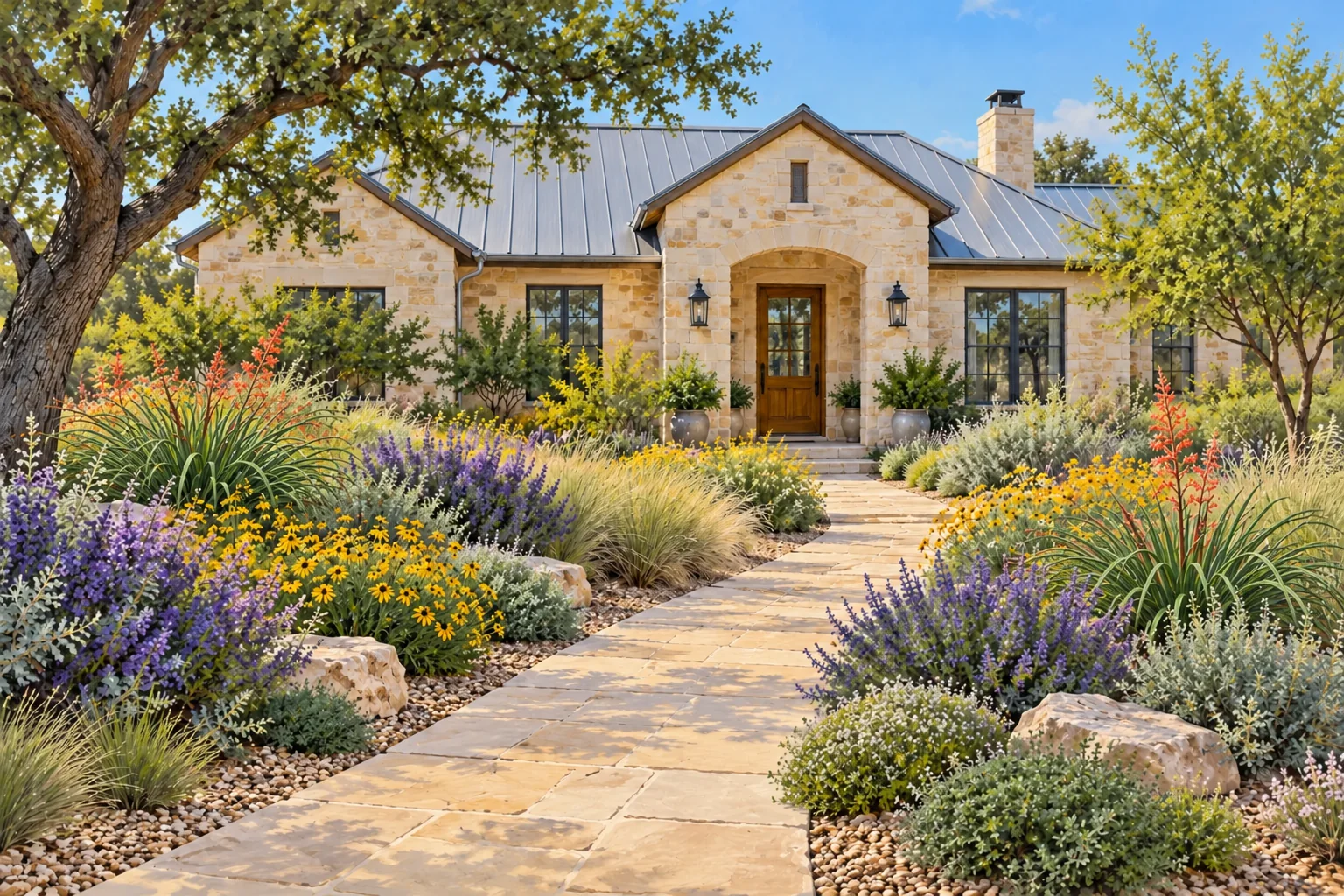
A strong sunny border or a softer shaded edge
In a sunny bed with well-drained rocky soil, narrow leaves and repeated flowers can give the garden a strong outline. Part shade suits a different look: broad, leafy plants above a low, fine-textured foreground. Match the example to your summer light and soil; a sunny clay bed needs a drainage check before you borrow the rocky-site planting.
A sunny bed with strong shapes and repeating flowers
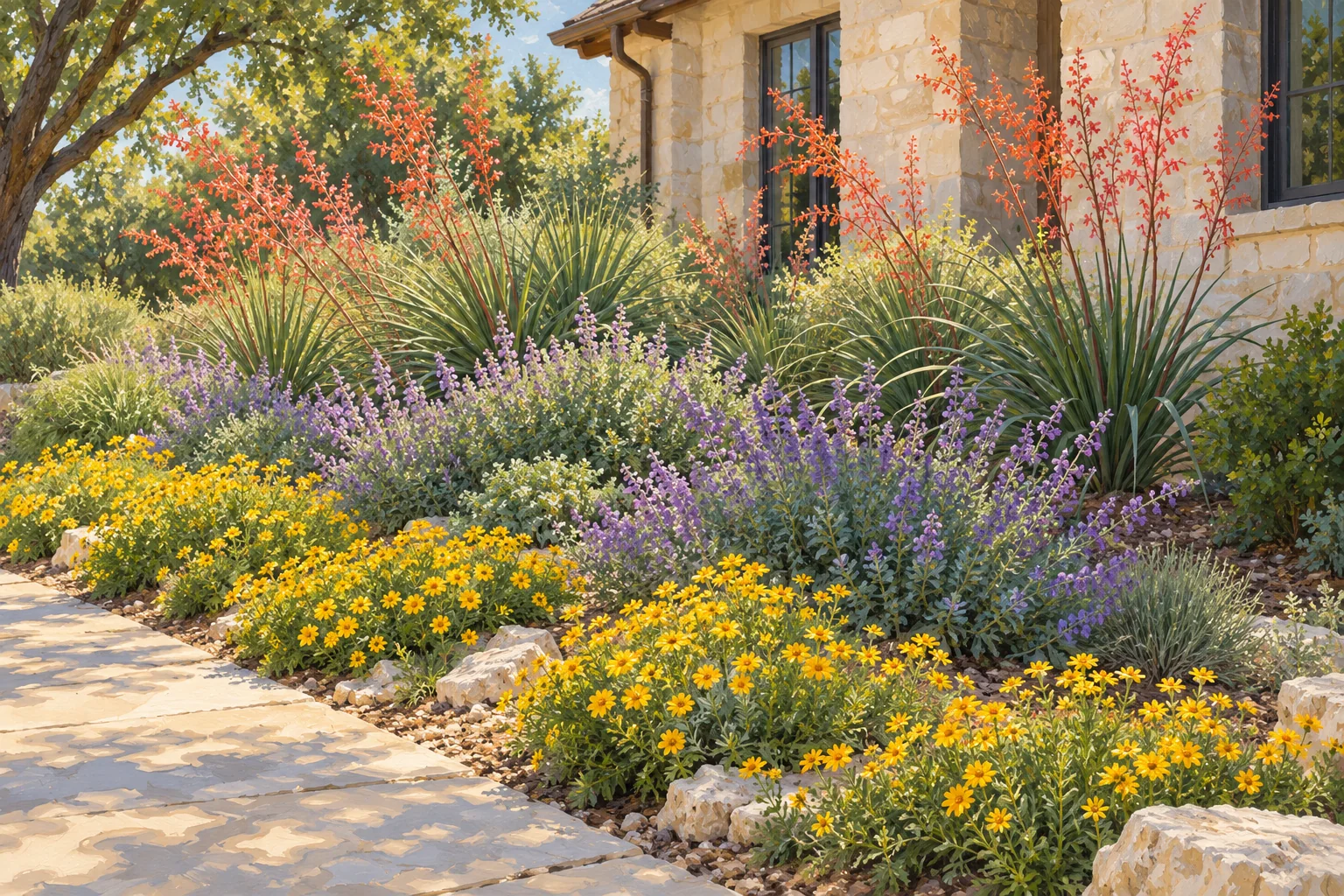
For full sun and well-drained limestone or rocky soil, consider red yucca (Hesperaloe parviflora), mealy blue sage (Salvia farinacea) and four-nerve daisy (Tetraneuris scaposa). Red yucca supplies a lasting arching shape, sage adds upright flower spikes, and daisy keeps the foreground low.1,7,8
Set the larger arching foliage back from the walk and repeat the sage rather than alternating a different plant at every step. Choose the exact varieties before deciding counts. Red yucca needs good drainage: if your clay stays wet after rain, change the planting rather than copying this combination unchanged.1,7
Let a shaded bed look softer than the sunny border
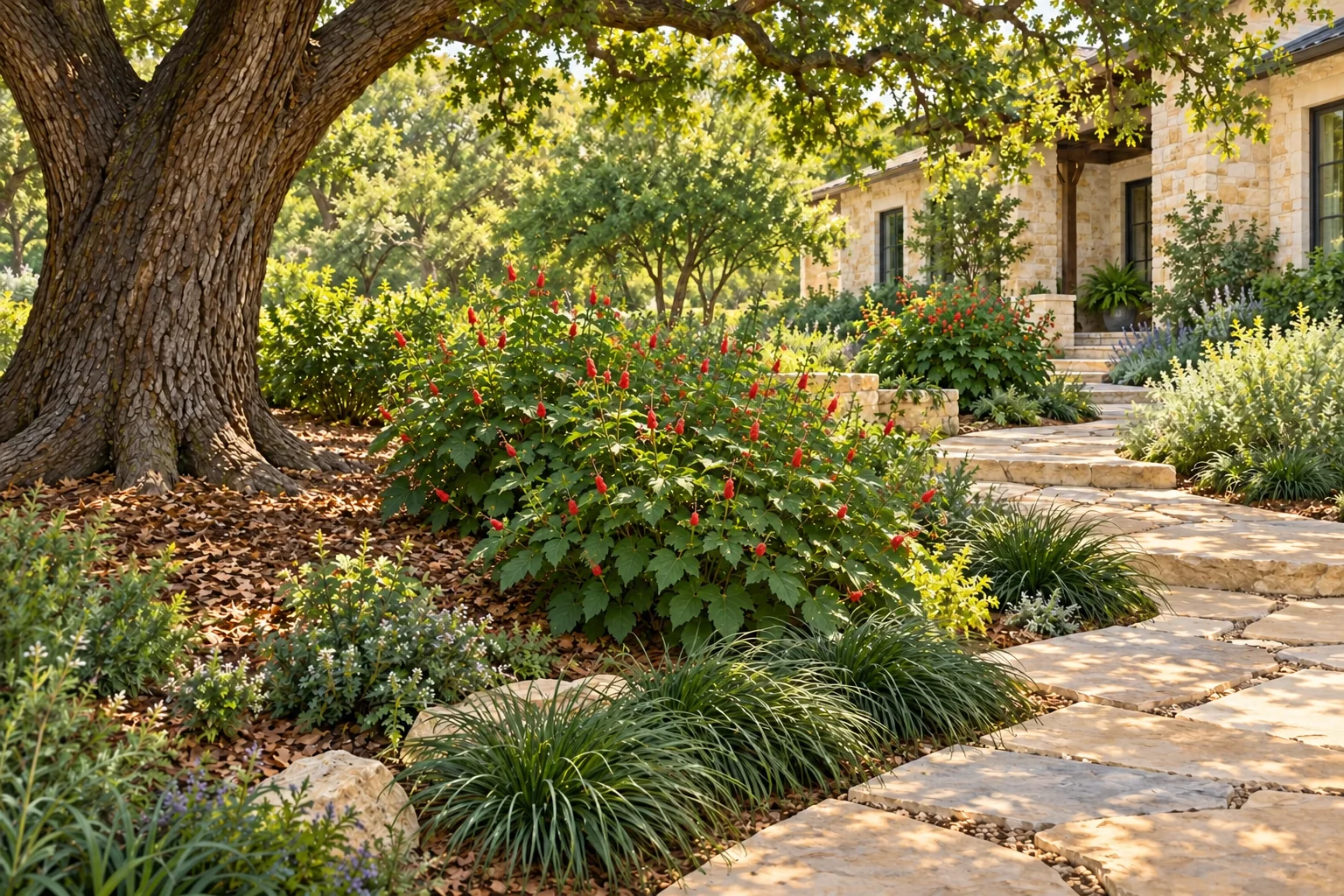
For part shade with room to spread, consider Turk's cap (Malvaviscus arboreus var. drummondii) with Texas sedge (Carex texensis). The flowering plant provides height and broad leaves; the sedge gives a lower, finer foreground. Check the sedge's exact name, because plants sold simply as ‘sedge’ have different moisture needs.9,10,11
Give Turk's cap a generous space rather than a tiny gap under a low window; its top growth may freeze back, while the sedge can keep a lower green layer. Near an established oak, keep soil levels unchanged and the trunk base clear. Use small plants only where roots allow them, and let mulch connect the unplanted space.9
Strong accents, low flowers and softer shade plants
The sunny example pairs an arching accent with repeated flowers; the shaded example uses broad leaves over finer foliage. Dwarf yaupon offers another option when you want a rounded shrub that stays green through winter.
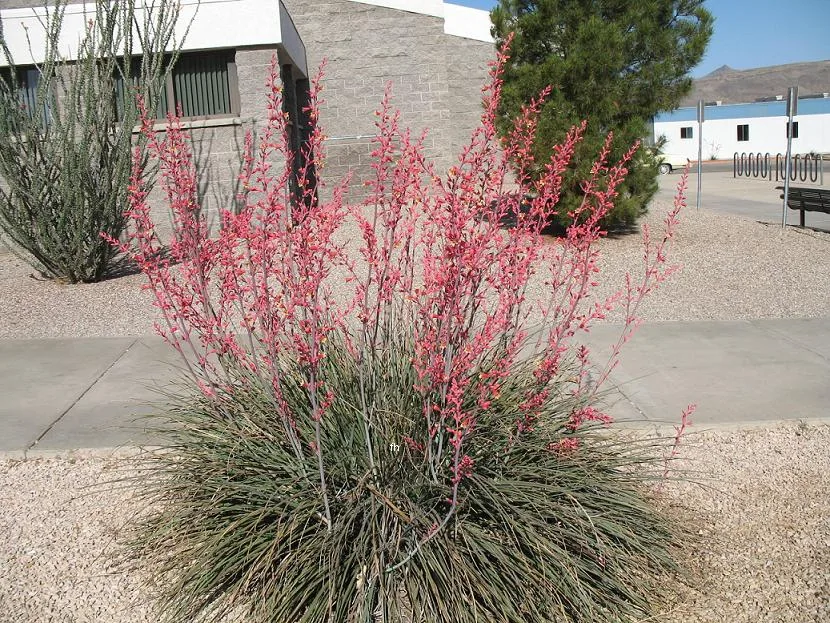
Red yucca
Hesperaloe parviflora
Narrow leaves arch beneath tall flower stalks. Give it a sunny, well-drained bed where the mature foliage stays clear of the walk.
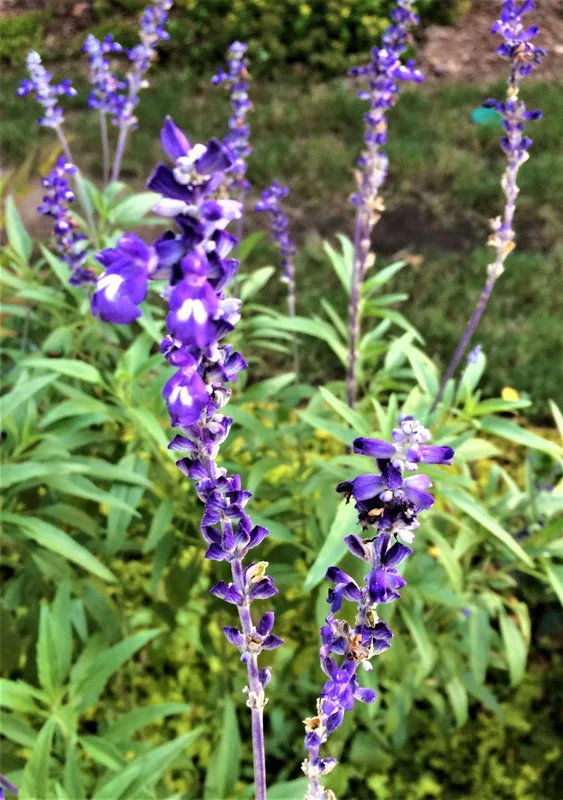
Mealy blue sage
Salvia farinacea
Upright blue-purple flower spikes repeat well between larger plants in a sunny bed.
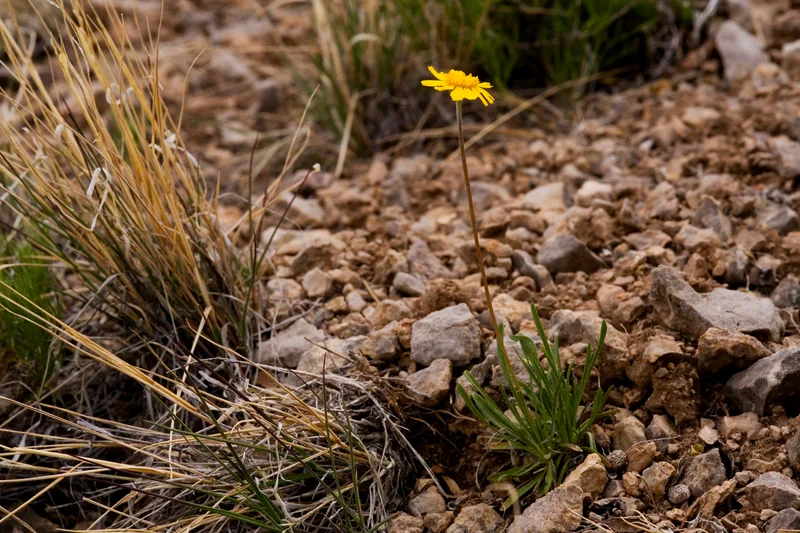
Four-nerve daisy
Tetraneuris scaposa
Yellow daisies rise above low, narrow foliage at the front of a sunny, well-drained rocky bed.
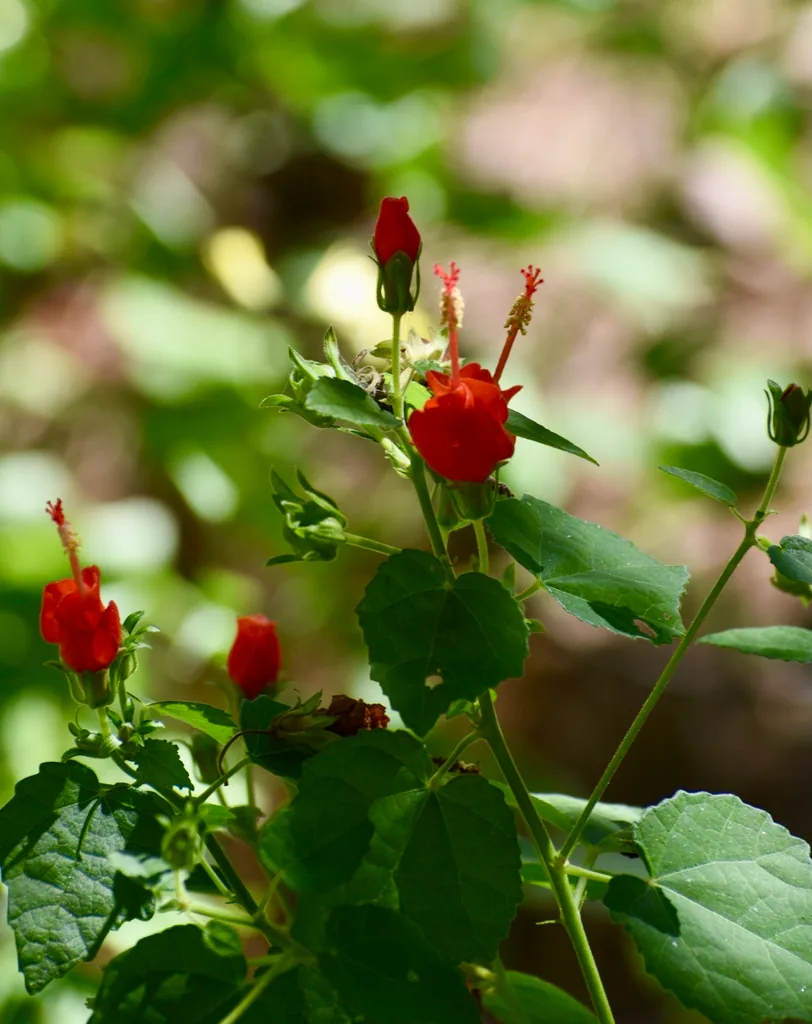
Turk's cap
Malvaviscus arboreus var. drummondii
Broad leaves and red flowers bring a softer look to part shade. Leave room for spreading growth, which can die back after freezes.
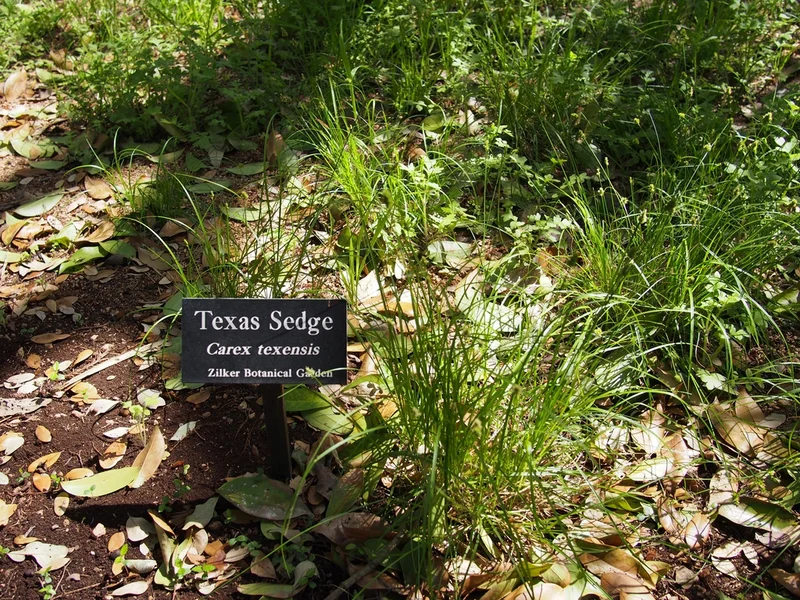
Texas sedge
Carex texensis
Low, fine-textured foliage connects a shaded edge. Fit small plants into suitable gaps around established roots.
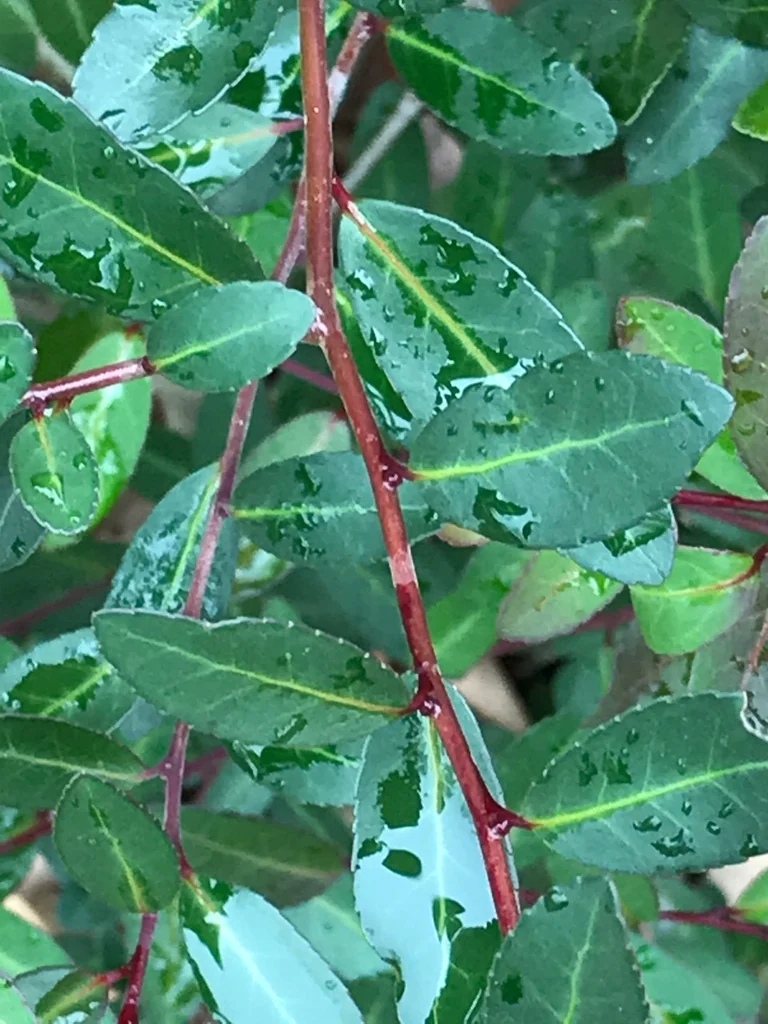
Dwarf yaupon holly
Ilex vomitoria, dwarf varieties
Rounded evergreen foliage gives a bed lasting shape in sun or part shade. Choose a named dwarf variety for the room you have.
Sources: Fritz Hochstatter, City of Austin Grow Green [7] [8] [9] [21], Central Texas Gardener, Austin PBS
What is under the first few inches of soil?
The Austin area crosses different landscapes. A plant that works in a neighbor's yard may be growing in a very different root zone.
Shallow soil over rock
Why it matters: Digging space and water storage are limited.
Useful next step: Choose plants suited to that depth and drainage; don't force a large root ball into a tiny pocket.
Deep clay
Why it matters: It can hold moisture long after the surface dries.
Useful next step: Check drainage before choosing plants that need sharply drained soil.
Dense roots beneath a tree
Why it matters: Digging and new irrigation can affect an established tree.
Useful next step: Use suitable small planting pockets and retain unplanted space where roots fill the ground.
Sources: Lower Colorado River Authority
Heat tolerance doesn't tell you the winter appearance
A plant can survive winter without keeping its summer height or leaves. Decide whether you need an evergreen screen or are happy with a flowering bed that retreats for a while. That distinction matters more than calling every plant ‘tough.’
For the sunny example, the red yucca's foliage carries a different winter role from the sage's seasonal stems. In the shade example, leave room for Turk's cap to return without placing something permanent in its temporary gap. Check local freeze guidance for the actual plants before pruning damaged growth.
Give each plant a place in one sunny bed
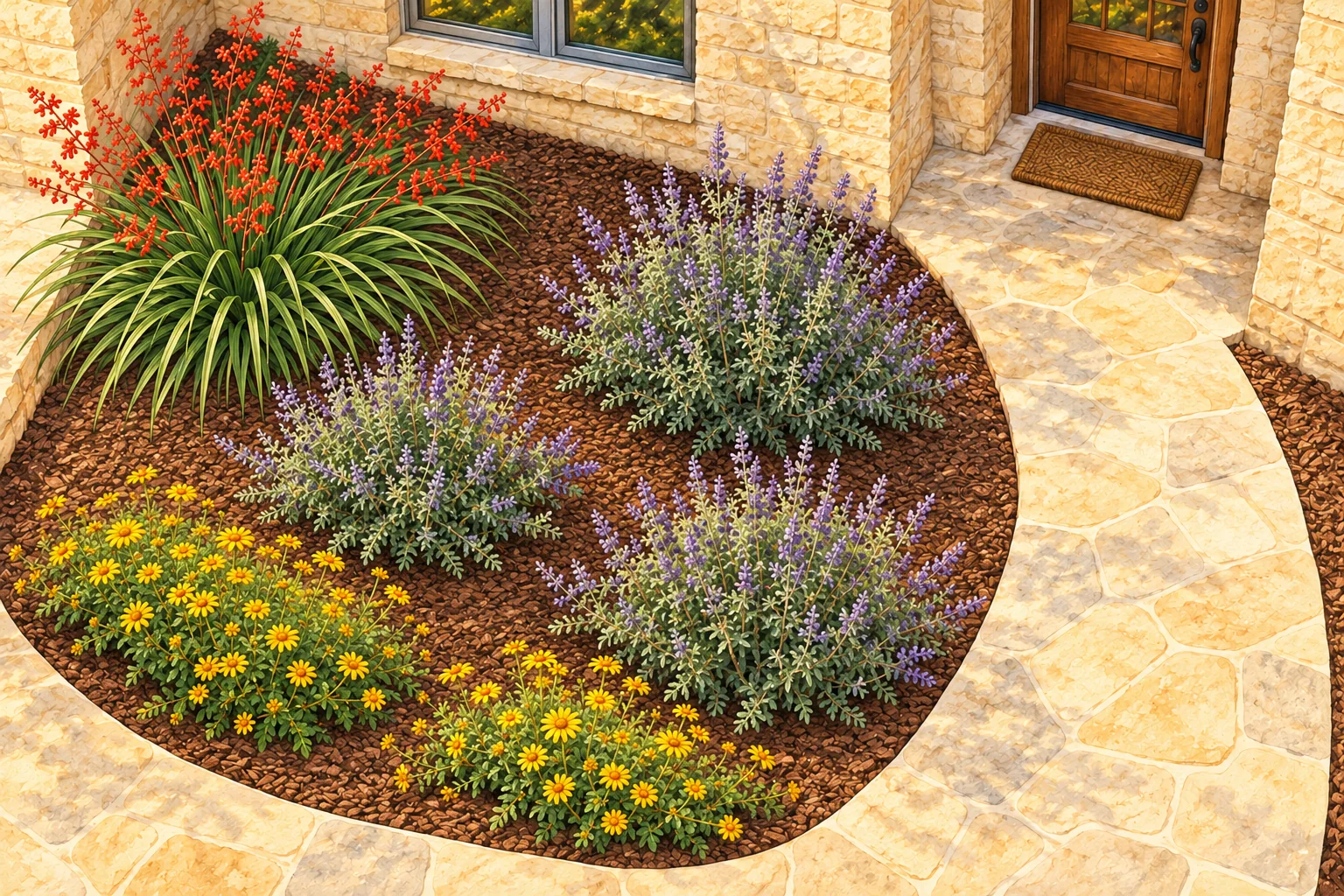
The sunny example becomes easier to adapt when you can see the whole bed. Keep the route and window clear, then fit the planting into the space that remains.
An accent set back from a low flowering edge
This layout uses the sunny, well-drained rocky-soil combination. It is a composition to adapt after checking soil depth, drainage and the chosen varieties' mature sizes.
- 1
The larger accent in the deeper corner
Place red yucca where its mature leaves can arch inside the bed, clear of the walk and window. If that footprint does not fit, use a smaller suitable accent rather than relying on repeated trimming.
- 2
Repeated purple flower groups
Use mealy blue sage in groups between the accent and the front edge. Repeating one flowering shape makes the bed read as a composition rather than a row of unrelated plants.
- 3
Low yellow flowers beside the clear walk
Keep four-nerve daisy toward the front, leaving the walking surface fully usable. Use the selected varieties' mature widths when deciding how many fit.
Frequently asked questions
What are good low-water front yard plants for Central Texas?
Red yucca, mealy blue sage and four-nerve daisy are candidates for a sunny, well-drained bed. In part shade, investigate Turk's cap and a locally suited sedge. Match the actual soil and mature space, and plan establishment watering rather than assuming low-water plants can be ignored after planting.
Can I plant red yucca in clay?
Drainage is the deciding factor. Red yucca does poorly in damp, heavy soil. Check what happens after rain; a bed that holds water needs a different planting choice or a properly planned drainage solution.
What can I plant under an oak in Central Texas?
At a partly shaded edge with suitable soil and gaps between roots, Texas sedge and Turk's cap are possibilities to investigate. Leave the trunk base clear, avoid digging through major roots and don't add a deep layer of soil over them. Where roots leave no safe planting room, retain mulch.
 Gardenful
See a Central Texas planting idea in your own yard.
Explore the shapes, flowers and spacing in Gardenful before choosing the locally suited plants for your bed.
Gardenful for iPhone
Download the app free and start with a photo of your yard.

Sources(21)
- [1]Red yucca photograph
Fritz Hochstatterhttps://plants.ces.ncsu.edu/plants/hesperaloe-parviflora/
CC BY-SA 3.0. Converted to WebP.
- [2]Turks cap photograph
Cathy Dewitthttps://plants.ces.ncsu.edu/plants/malvaviscus-arboreus-var-drummondii/
CC BY 4.0. Converted to WebP.
- [3]
- [4]
- [5]Landscape Guidelines
Lower Colorado River Authorityhttps://www.lcra.org/water/watersmart/landscape-guidelines/
- [6]Red Yucca
NC State Extensionhttps://plants.ces.ncsu.edu/plants/hesperaloe-parviflora/
- [7]Mealy Blue Sage
City of Austin Grow Greenhttps://www.austintexas.gov/watershed-protection/plant-guide/sage-mealy-blue
- [8]
- [9]Turk's Cap
City of Austin Grow Greenhttps://www.austintexas.gov/watershed-protection/plant-guide/turks-cap
- [10]Sedges
City of Austin Grow Greenhttps://www.austintexas.gov/watershed-protection/plant-guide/sedges
- [11]Texas Sedge
Central Texas Gardener, Austin PBShttps://www.centraltexasgardener.org/resource/texas-sedge/
- [12]
- [13]Salvia farinacea photograph
Carol Tierneyhttps://plants.ces.ncsu.edu/plants/salvia-farinacea/
Photograph by Carol Tierney, CC BY 4.0; resized and converted to WebP, without cropping.
- [14]Tetraneuris scaposa photograph
Patrick Alexanderhttps://commons.wikimedia.org/wiki/File:Tetraneuris_scaposa_var._scaposa_-_Flickr_-_aspidoscelis.jpg
Photograph by Patrick Alexander, CC0 1.0; resized and converted to WebP, without cropping.
- [15]
- [16]
- [17]Carex texensis photograph
F. D. Richardshttps://plants.ces.ncsu.edu/plants/carex-texensis/
Photograph by F. D. Richards, CC-BY-SA 2.0; resized and converted to WebP, without cropping. The adaptation retains the same license.
- [18]
- [19]Ilex vomitoria photograph
K. Andrehttps://plants.ces.ncsu.edu/plants/ilex-vomitoria/
Photograph by K. Andre, CC BY 2.0; converted to WebP.
- [20]
- [21]Dwarf yaupon holly
City of Austin Grow Greenhttps://www.austintexas.gov/watershed-protection/plant-guide/holly-dwarf-yaupon