Seasonal planting with a clear edge
Midwest front yard plants for a tidy prairie-style border
The short answer
Midwest gardens change dramatically through the seasons, from spring flowers to summer growth and the bare outlines of winter. Prairie grasses and perennials can bring that changing view to a sunny front yard without turning the whole lawn into a meadow. The examples below combine flowering groups, lasting grass shapes and a clear edge, with choices for soil moisture and room for plants to reach their full size.

One sunny border with a changing seasonal view
A prairie-style front border can stay contained by a path or mown edge while its grasses and flowers change through the year. This example suits a sunny, well-drained central or upper Midwest site. Keep each plant's mature space in mind: the spring garden looks open because some of the summer planting has yet to grow.
See the same border in spring, summer and winter
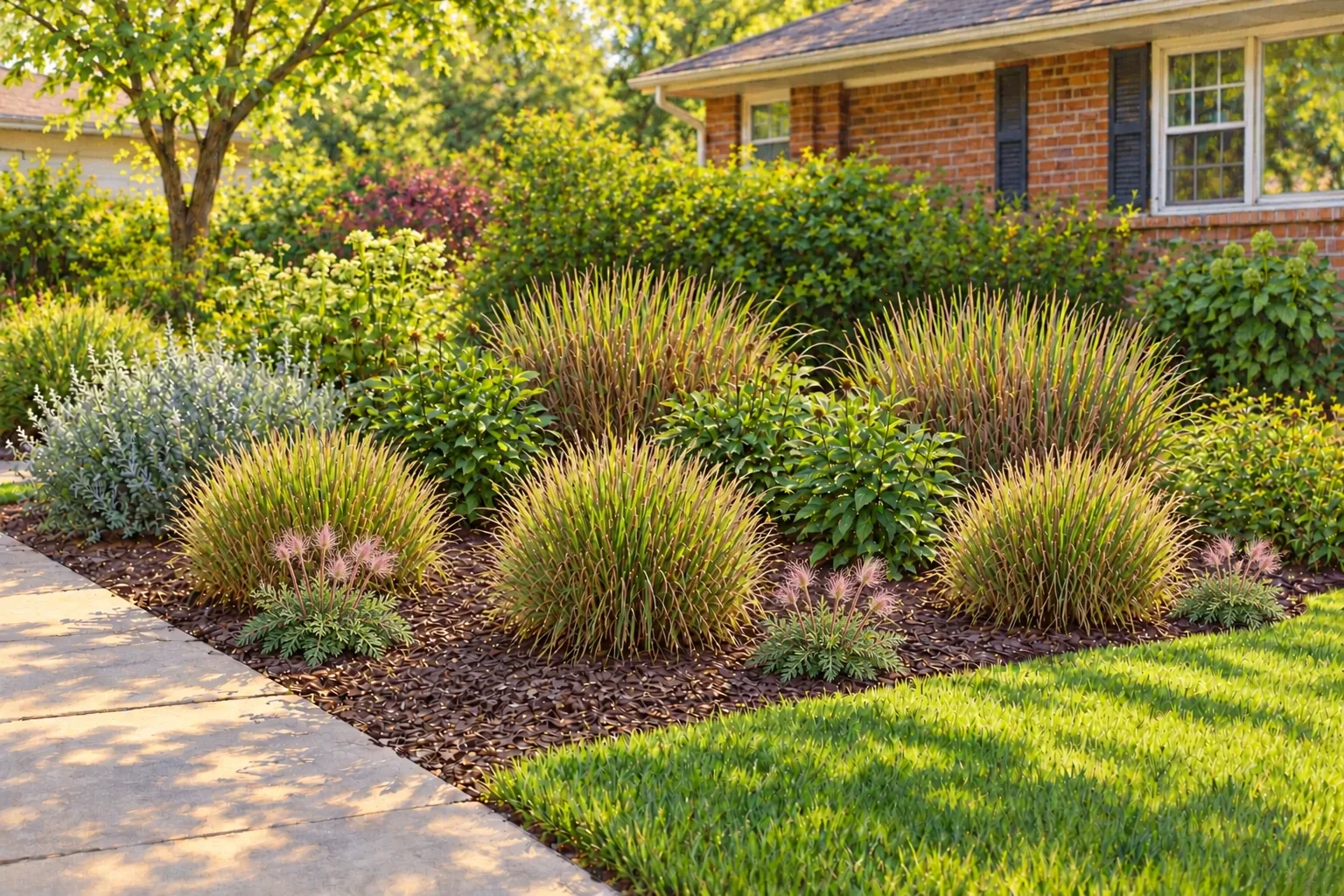
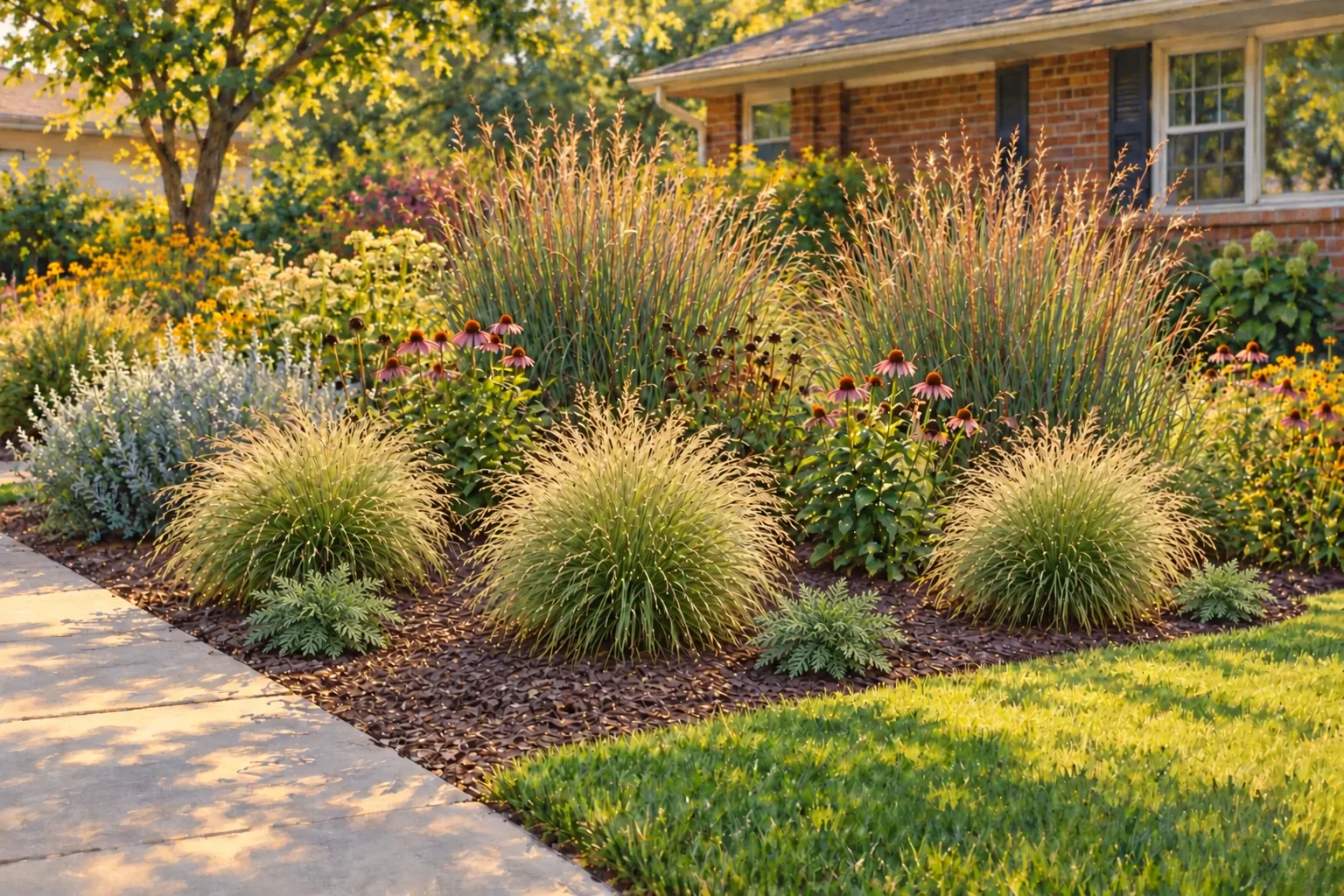
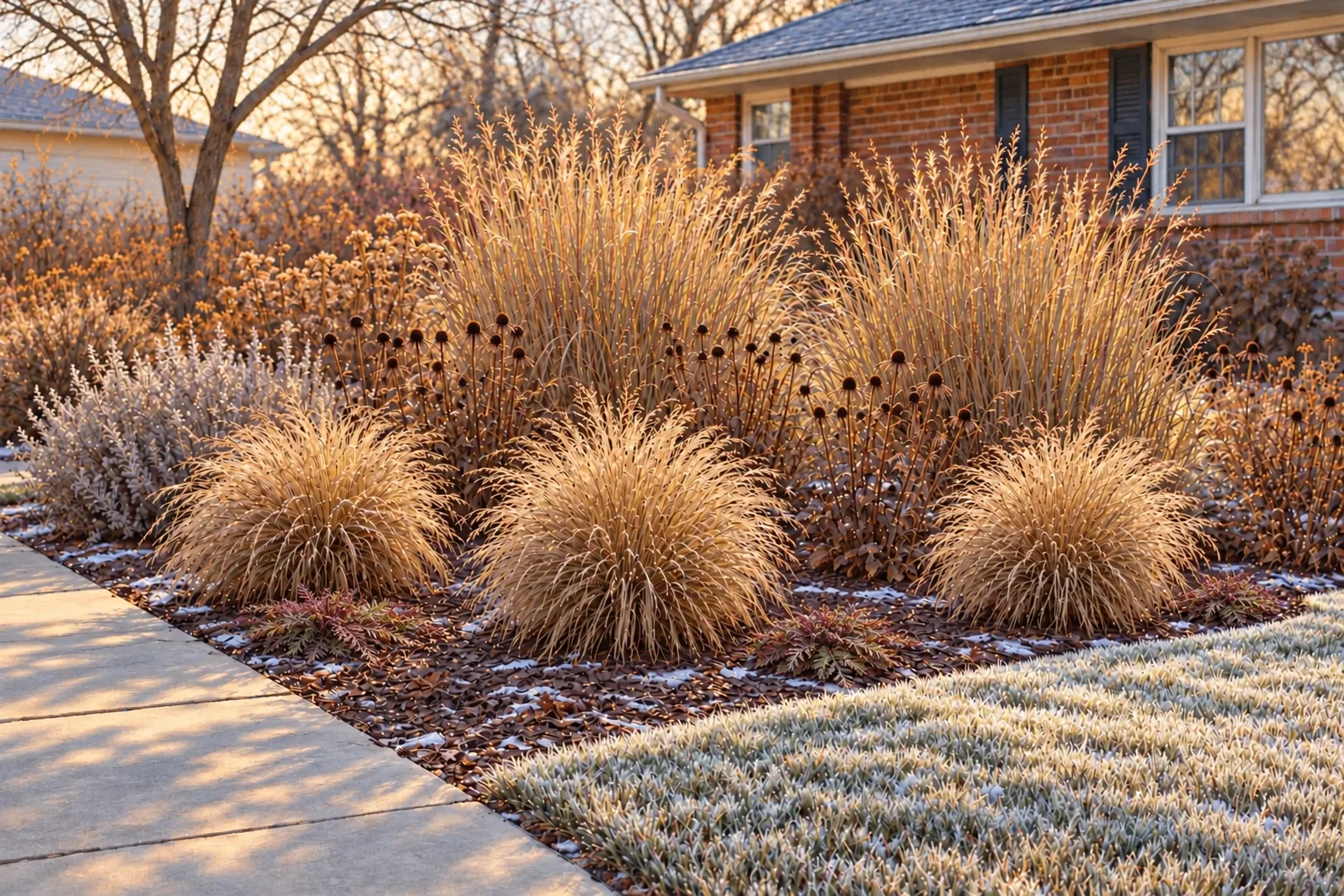
The path, bed shape and plant positions stay the same in these seasonal illustrations. Different parts of the planting carry the view as the year changes.
1
Spring: low flowers have their own pockets
Prairie smoke brings early flowers and feathery seedheads while the warm-season grasses are still developing. Keep it near the front in a separate pocket, where later grass foliage will not cover its crown.
2
Summer: rounded and upright shapes fill the bed
Prairie dropseed gives the front a lower, arching shape; little bluestem and purple coneflower add height behind it. Repeated groups and a clear edge hold the fuller planting together.
3
Winter: stems and the permanent edge remain
Grasses and seedheads can carry texture after flowers finish. Keep the stems that remain upright and attractive, with entrances and walking routes clear; heavy snow may flatten some of the display.
Sources: Illinois Extension [4] [8], NC State Extension, Iowa State University Extension, University of Wisconsin Extension
Grasses and flowers that take turns through the year
Choose a few plants for the view you want: rounded or upright grasses, early spring detail, summer color or a late flush of flowers. These are sunny-border options; match the exact variety to your winter climate and soil moisture.
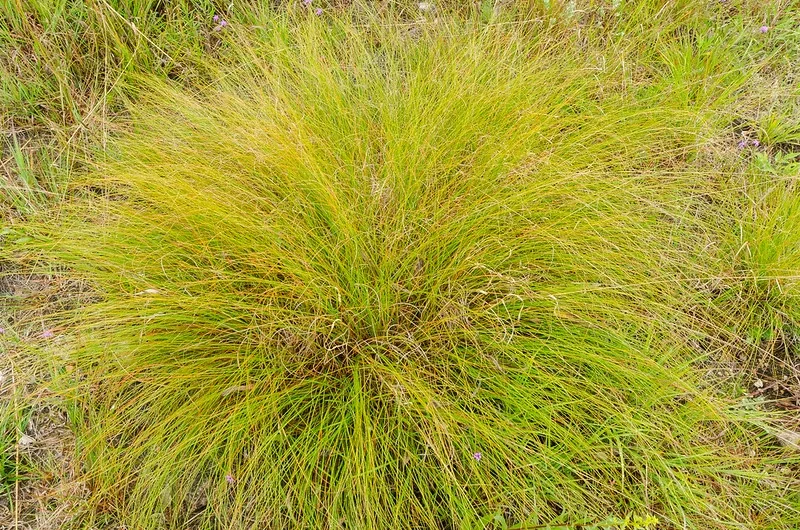
Prairie dropseed
Sporobolus heterolepis
Fine, arching foliage gives a sunny, well-drained border shape. Leave its mature width available even in spring.
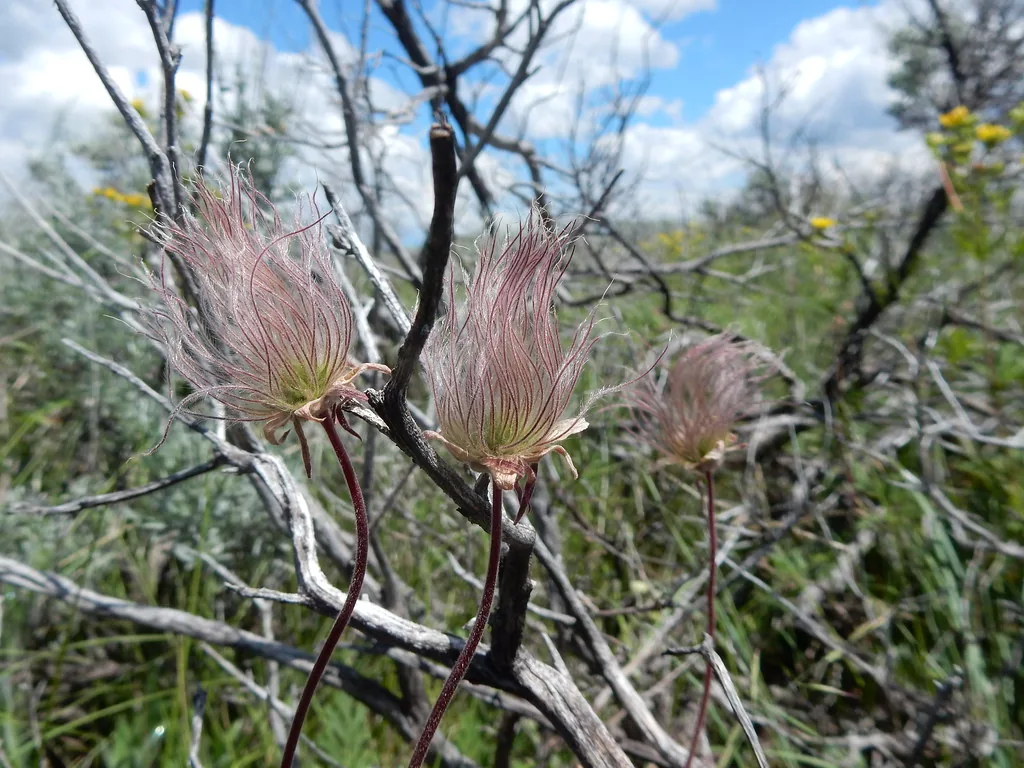
Prairie smoke
Geum triflorum
Low spring flowers and feathery seedheads suit well-drained northern or central Midwest beds. Give it a separate pocket near the front.
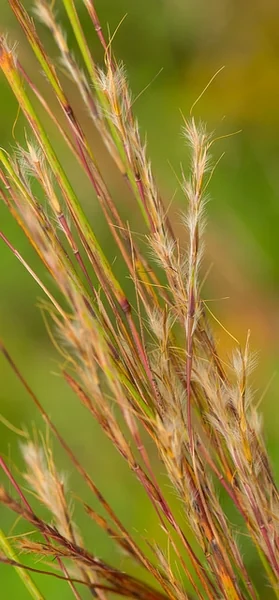
Little bluestem
Schizachyrium scoparium
Upright stems and warm autumn color suit a sunny border. Good drainage and room for the mature plant help it hold its shape.
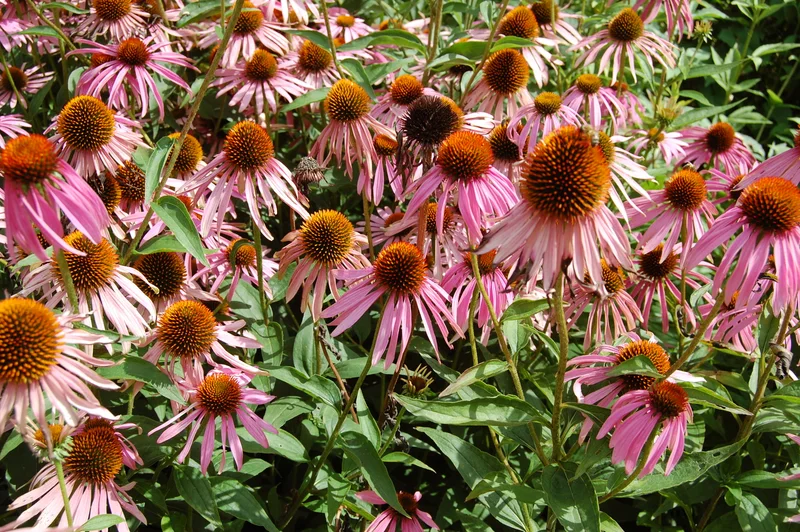
Purple coneflower
Echinacea purpurea
Pink-purple summer flowers rise above leafy clumps in sun and well-drained soil. Leave some seedheads for the quieter months.
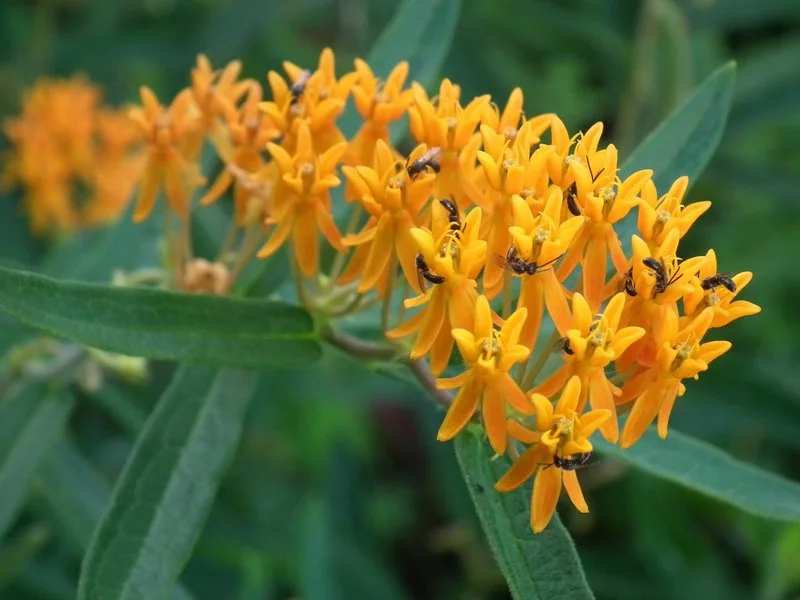
Butterfly weed
Asclepias tuberosa
Orange summer flower clusters suit dry, sunny, well-drained spots. Choose a place where the deep root can stay undisturbed.
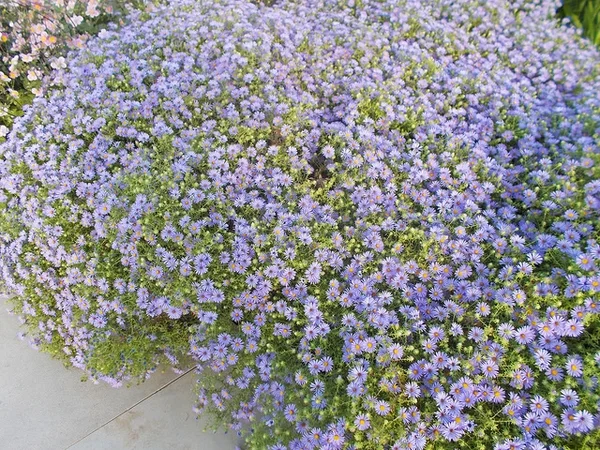
Aromatic aster
Symphyotrichum oblongifolium
Purple flowers extend the color into late summer and fall. Give it sun, drainage and room to spread.
Sources: Joshua Mayer [1] [10], University of Wisconsin Extension, NC State Extension [7] [18], Andrey-Zharkikh, Iowa State University Extension
Choose a prairie plant for the right kind of ground
The Midwest includes dry uplands, moist prairie and wooded sites. A native label doesn't make those conditions interchangeable.
Sun and well-drained soil
What to plant: Clump-forming grasses with flowering perennials that share the drainage.
What to avoid: Putting moisture-loving plants beside dry-site plants on one watering schedule.
Sun with a seasonally wet low spot
What to plant: A locally appropriate wet-site palette and a check on where water goes.
What to avoid: Assuming all ornamental grasses tolerate standing water.
Shade beneath mature trees
What to plant: Woodland plants and sedges chosen for actual soil moisture.
What to avoid: Forcing a sunny prairie border into root-filled shade.
Sources: Iowa State University Extension
Leave space for winter use and seasonal care
Reserve the usual snow-storage area before extending the border beside a driveway. Deicing salts can damage plants through spray, piled snow and meltwater. A winter-hardy plant isn't automatically salt-tolerant.9
Plan seasonal cutback as a real task, with somewhere to put the stems. Keep dry vegetation away from ignition sources and follow local fire guidance where relevant. Naturalistic planting still needs weeding, monitoring and access for maintenance.
Fit the seasonal planting along one visible edge
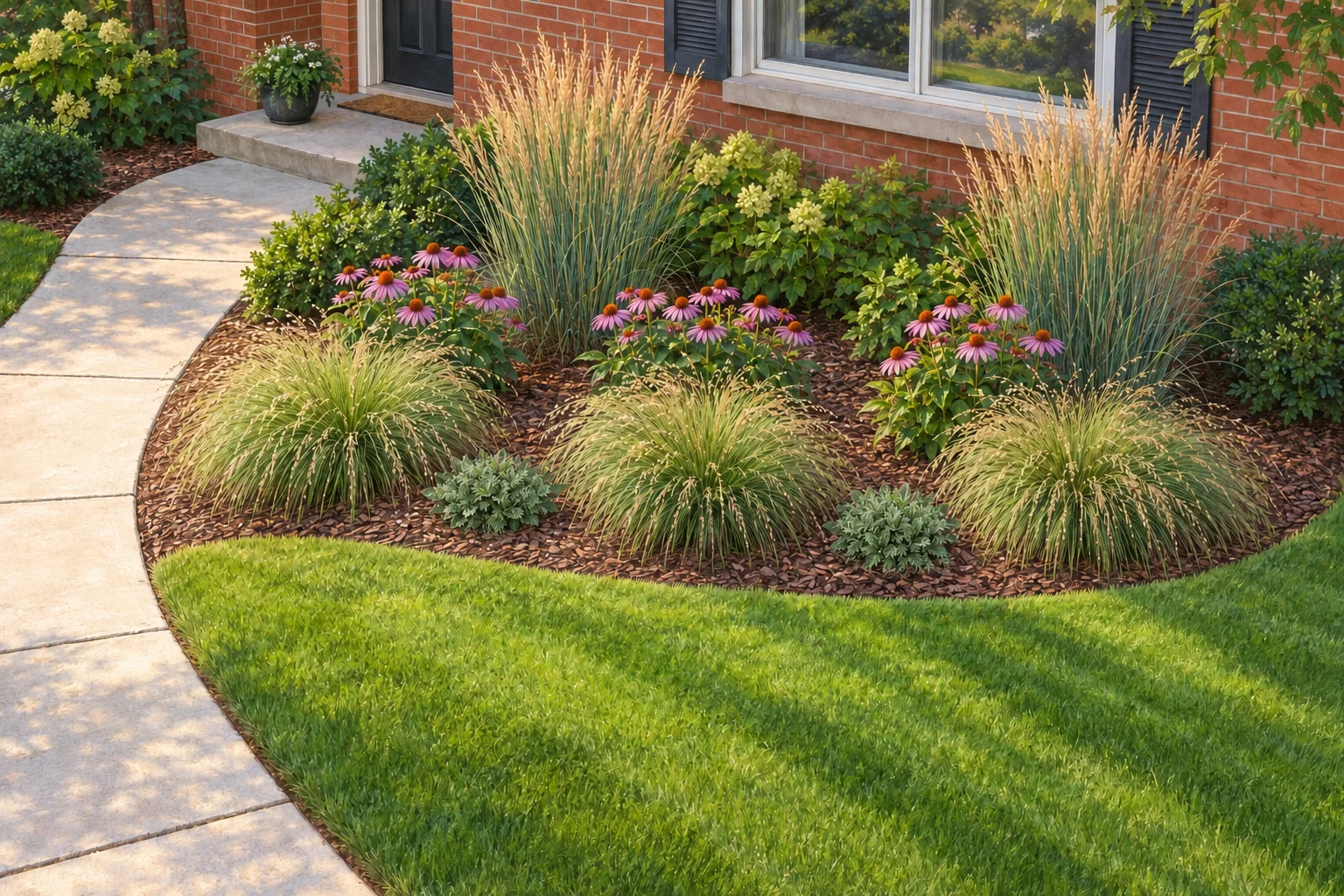
Here is one way to arrange the planting in a smaller front bed. Keep each grass’s mature footprint available through the quiet months, then place the lower groups in their own spaces.
Grass shapes, flower groups and separate spring pockets
This separate layout uses the same sunny, well-drained planting approach. Choose local varieties for your space and winter conditions; the groups show placement rather than a fixed shopping count.
- 1
The rounded grass clumps
Mark prairie dropseed at its mature width near the front, keeping its arching foliage inside the bed. Those spaces remain occupied even while the grass is cut back or growing slowly.
- 2
The taller grasses and summer flowers
Place little bluestem and coneflower groups farther back where the bed has enough depth. A narrow border can use one repeated grass with flowers beside it rather than squeezing in three layers.
- 3
The separate low spring pockets
Put prairie smoke where its early details are visible without sitting beneath a future grass clump. Its leaves can look tired in summer heat, so let the surrounding planting take over the view while leaving its crown clear.
Frequently asked questions
What plants suit a sunny Midwest front yard?
For well-drained ground, prairie dropseed, little bluestem and purple coneflower are candidates for a small repeated border. Add a locally suitable spring-flowering plant if the bed would otherwise be quiet early in the year. Check mature size, moisture and winter hardiness for the exact varieties.
Why does my prairie-style garden look empty in spring?
Many warm-season grasses begin active growth later in the year. Leave their mature space available, and add early flowers only in separate pockets that won't become crowded later. Prairie smoke can suit sunny, well-drained sites in parts of the northern and central Midwest.
Can native prairie plants grow in clay?
Some can, but drainage matters as much as soil texture. A clay bed that drains is different from a low spot that stays saturated. Choose plants for the actual moisture and avoid transferring one dry-site combination to every Midwest yard.
 Gardenful
See a prairie-style border beside your home.
Try a photo of your yard in Gardenful. Compare a planting idea, keep the space you need, and take the suggested plant list to a local nursery.
Gardenful for iPhone
Download the app free and start with a photo of your yard.

Sources(19)
- [1]Prairie dropseed photograph
Joshua Mayerhttps://plants.ces.ncsu.edu/plants/sporobolus-heterolepis/
CC-BY-SA 2.0. Converted to WebP.
- [2]Prairie smoke photograph
Matt Lavin from Bozeman, Montana, USAhttps://commons.wikimedia.org/wiki/File:Geum_triflorum_-_prairie_smoke_-_Flickr_-_Matt_Lavin.jpg
CC BY-SA 2.0. Converted to WebP. Seed-head detail.
- [3]
- [4]
- [5]
- [6]Prairie Smoke, Geum triflorum
University of Wisconsin Extensionhttps://hort.extension.wisc.edu/articles/prairie-smoke-geum-triflorum/
- [7]Purple Coneflower
NC State Extensionhttps://plants.ces.ncsu.edu/plants/echinacea-purpurea/
- [8]
- [9]
- [10]Schizachyrium scoparium photograph
Joshua Mayerhttps://plants.ces.ncsu.edu/plants/schizachyrium-scoparium/
Photograph by Joshua Mayer, CC BY-SA 2.0 DE; converted to WebP. The adaptation retains the same license.
- [11]
- [12]Echinacea purpurea photograph
Rlhttps://commons.wikimedia.org/wiki/File%3A2007%20echinacea%20purpurea.jpg
Photograph by Rl, cc-by-sa-3.0; resized and converted to WebP, without cropping. The adaptation retains the same license.
- [13]
- [14]Asclepias tuberosa photograph
Cbaile19https://commons.wikimedia.org/wiki/File:Asclepias_tuberosa,_2025-07-14-1.jpg
Photograph by Cbaile19, CC0; resized and converted to WebP, without cropping.
- [15]
- [16]Symphyotrichum oblongifolium photograph
Andrey-Zharkikhhttps://plants.ces.ncsu.edu/plants/symphyotrichum-oblongifolium/
Photograph by Andrey-Zharkikh, CC BY 4.0; resized and converted to WebP, without cropping.
- [17]
- [18]Butterfly weed
NC State Extensionhttps://plants.ces.ncsu.edu/plants/asclepias-tuberosa/
- [19]Perennials for dry soils
Iowa State University Extensionhttps://yardandgarden.extension.iastate.edu/faq/which-perennials-grow-well-dry-soils