Plan the summer bed and the winter view
Northeast front yard plants for more than summer flowers
The short answer
A Northeast front yard needs a planting plan for winter as well as summer. Flowers may fill the border in July, but bare branches, berries and evergreen foliage shape the view after leaves fall. The examples below pair summer-flowering shrubs with ferns and show how winterberry can add a winter focal point. Match the planting to your winter cold, light and soil so you have something to enjoy beyond the flowering season.
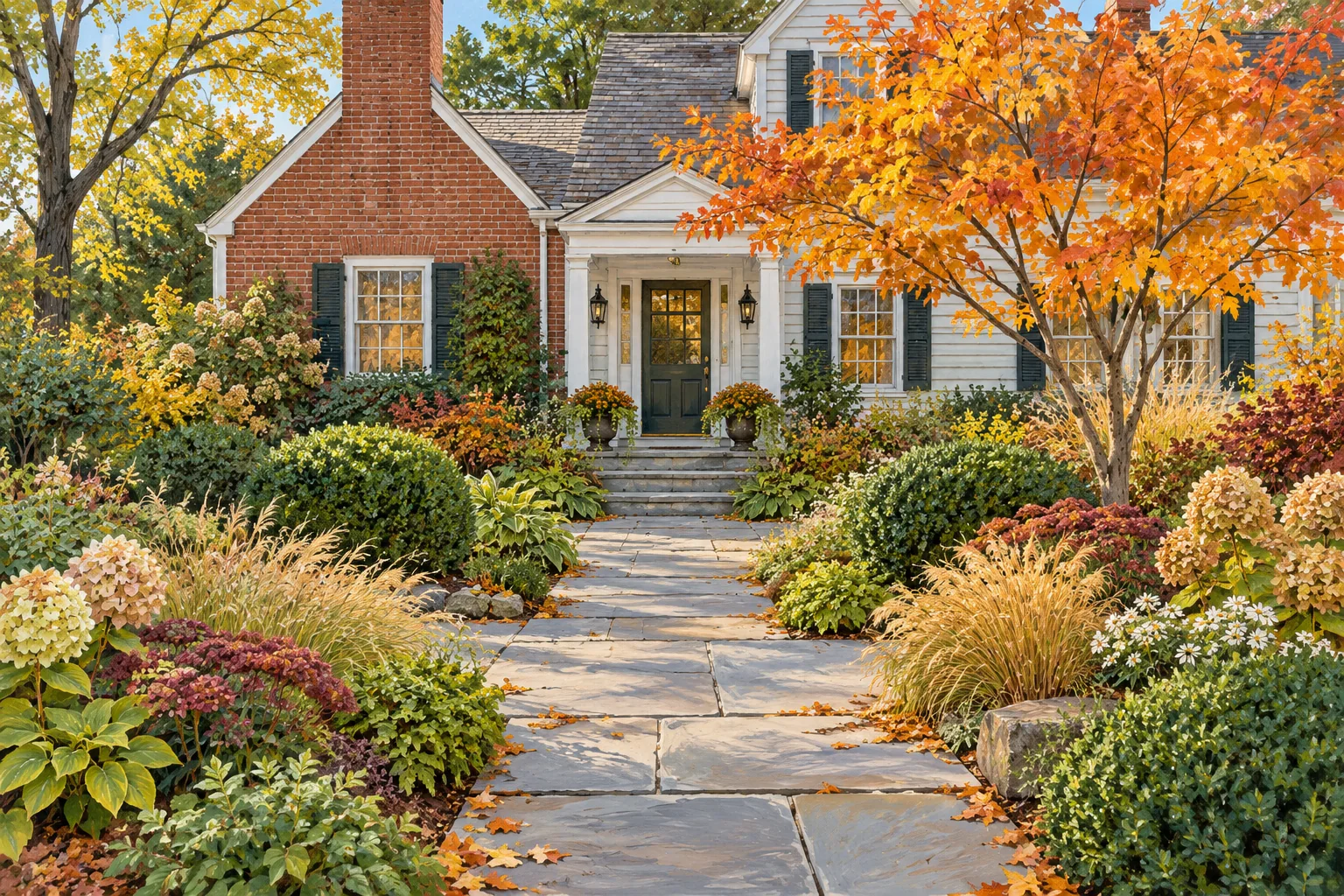
Choose a summer border with a winter view in mind
A moist, partly shaded bed can feel leafy and full in summer, with flowers above fern foliage. Nearby, a well-placed winterberry can bring color after leaves fall. Start by looking at the whole front garden in both seasons, then choose the plants for each part.
Picture the same front garden in summer and winter
Keep the paths, windows and plant footprints in both views. Then look at what the summer planting hides and what remains after the leaves fall.

Summer: leave room for the whole shrub
Leafy shrubs fill much more of the view than their bare winter branches. Give them mature space beside the windows and walk, with lower planting where it will still be visible. Keep the driveway’s snow-storage strip available even when there is no snow.
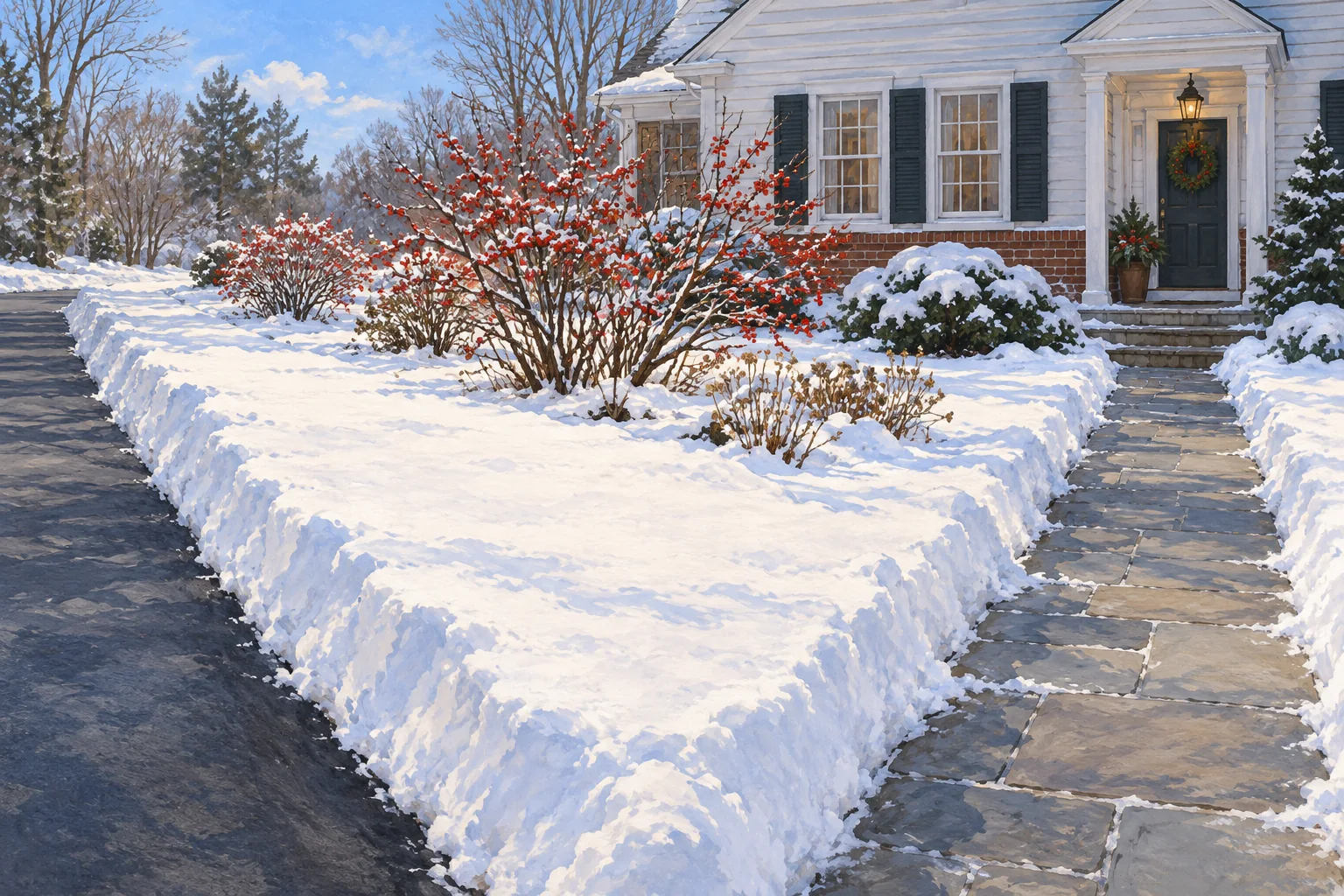
Winter: choose what you want to see from indoors
A female winterberry can bring red berries to the bare view, while branches, evergreen planting and a clear bed edge give it a lasting outline. Birds may eat the berries, so give the garden more than one winter feature.
Sources: Cathy Dewitt, UMass Extension
A moist, partly shaded border with summer flowers
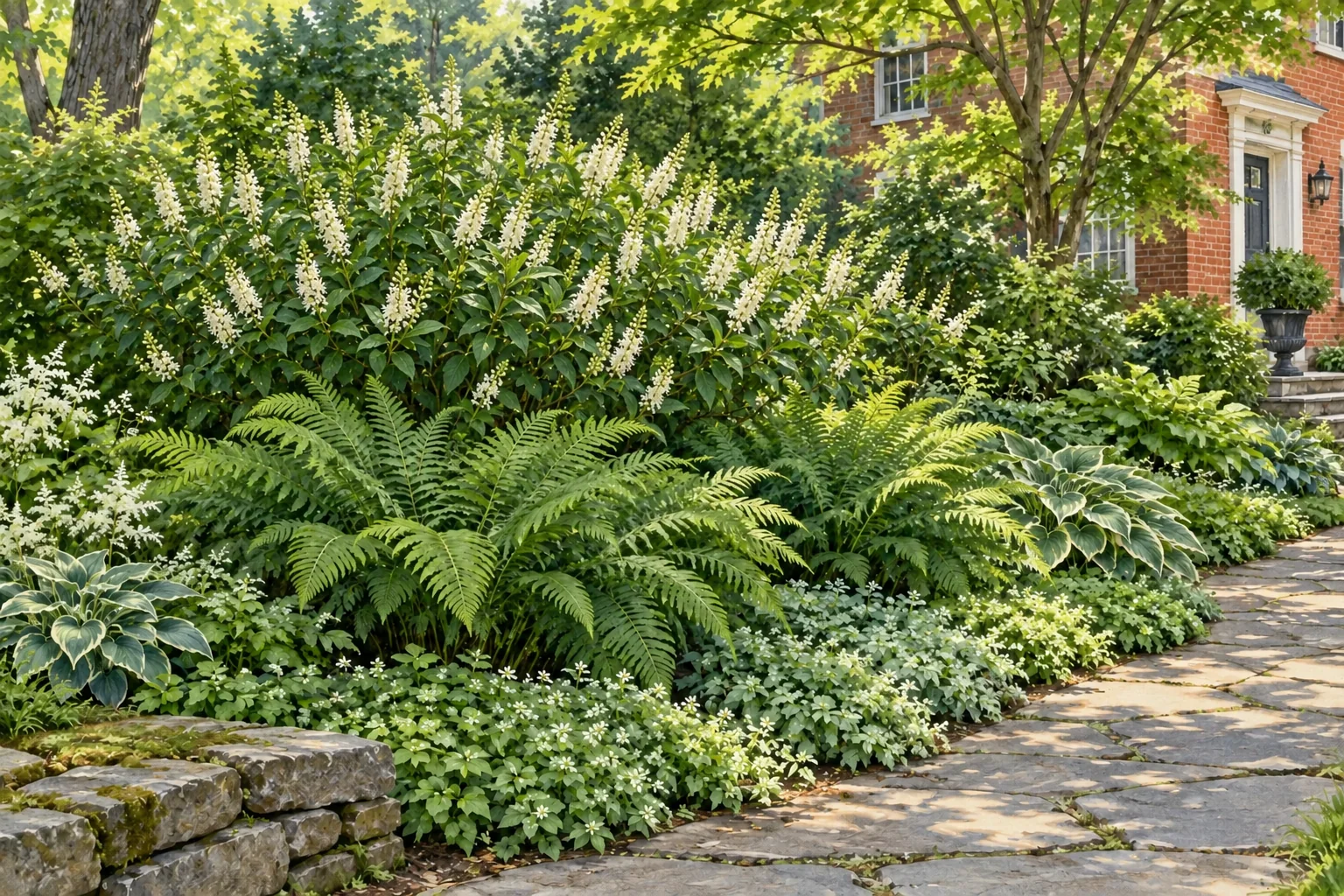
For a southern New England or nearby Northeast garden with moist, acidic, well-drained soil and partial shade, consider summersweet (Clethra alnifolia) behind Christmas fern (Polystichum acrostichoides). Summersweet brings fragrant summer flowers. The fern contributes a different leaf shape and foliage that persists beyond the flowering season.6,7
Choose a shrub variety whose mature size fits the bed. Plant the ferns beside and in front of its eventual outline, leaving room to reach the back for care. A low groundcover can connect the groups, but you don't need to fill every gap on planting day.
Summersweet can spread into a small colony and is a poor choice for a hot, dry foundation bed. If the soil dries hard beneath the eaves, change the plant rather than expecting the house's shade to make up for missing water. In colder northern or high-elevation gardens, check the chosen variety's winter hardiness locally.6
Six plants for a Northeast garden through the seasons
Choose the job you need: summer flowers, winter berries, evergreen foliage or red stems. These options suit different beds. Keep moisture-loving shrubs in the damper ground and save well-drained shade for Christmas fern and mountain laurel; check local hardiness and each variety’s mature size. Choose a few that share the light and moisture in your bed.
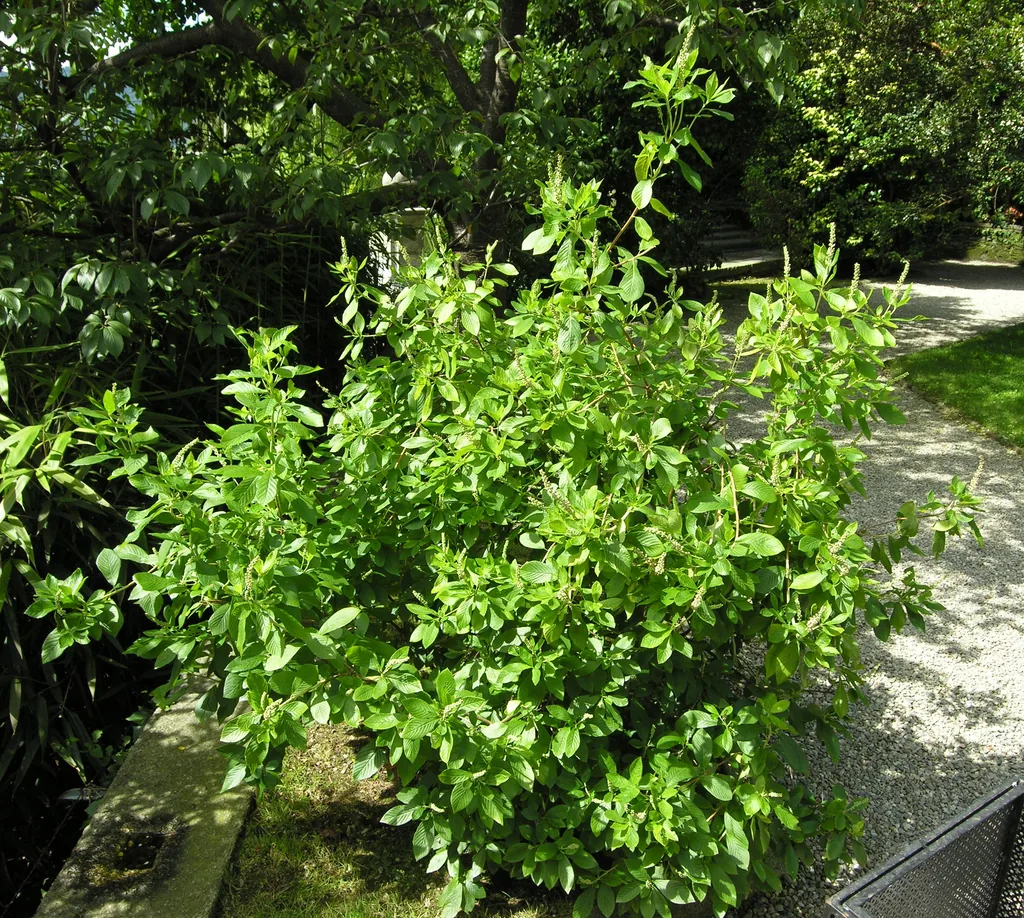
Summersweet
Clethra alnifolia
Fragrant summer flower spikes brighten a moist, acidic bed in sun or part shade.
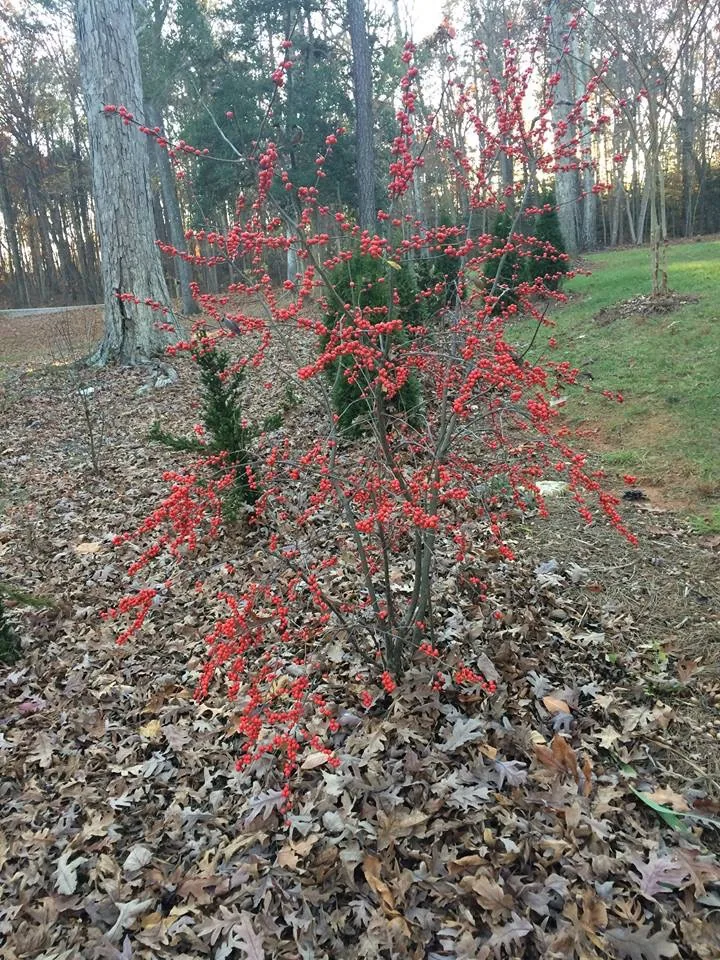
Winterberry
Ilex verticillata
Red berries show after the leaves fall; a female in moist acidic soil needs a male that flowers at the same time.
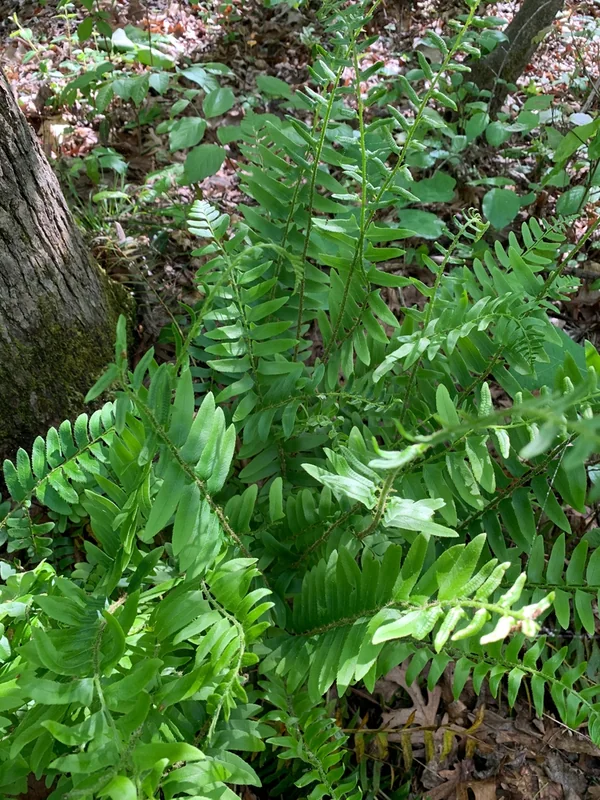
Christmas fern
Polystichum acrostichoides
Evergreen fronds add a low layer in shaded, well-drained ground beneath deciduous shrubs.
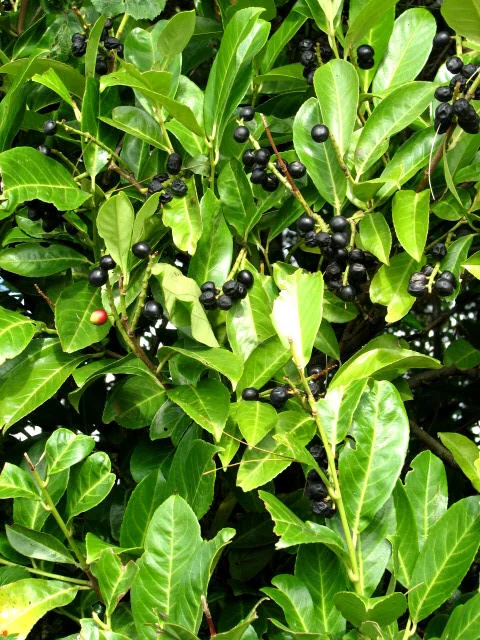
Inkberry
Ilex glabra
Small evergreen leaves give a moist, acidic bed lasting shape in sun or part shade.
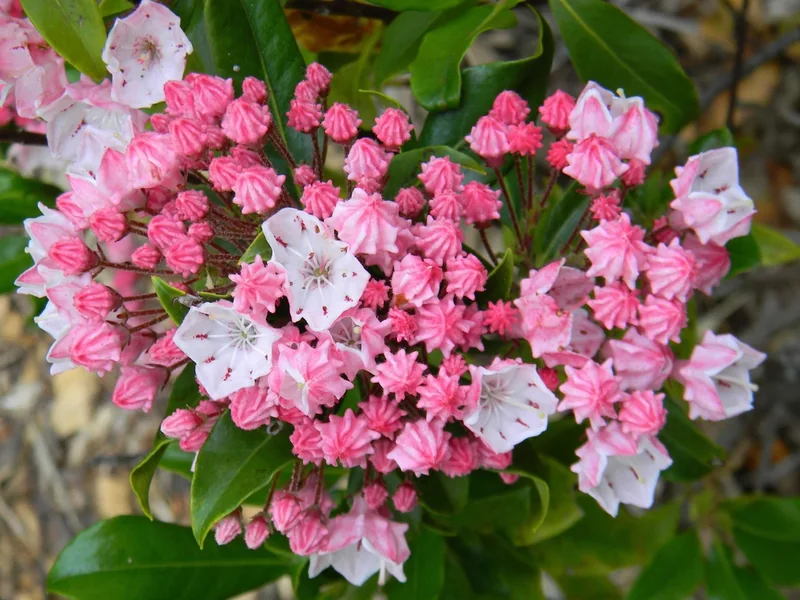
Mountain laurel
Kalmia latifolia
Cupped spring flowers brighten partly shaded, acidic, well-drained soil; ‘Olympic Fire’ is pictured.
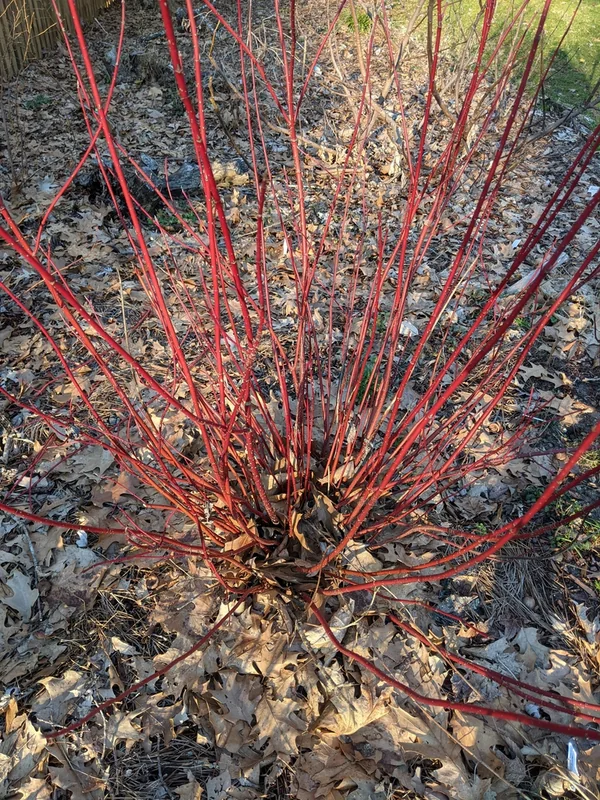
Red-osier dogwood
Cornus sericea
Red winter stems stand out in a roomy, moist border in sun or part shade; allow for its spreading growth.
Sources: NC State Extension [6] [7] [10] [11] [12], Cathy Dewitt, Rutgers Cooperative Extension
Place the berry shrub, its partner and the snow space
In a moist, acidic front bed, put the female winterberry where you will enjoy it from the house. Its pollination partner and mature spread belong in the plan too.
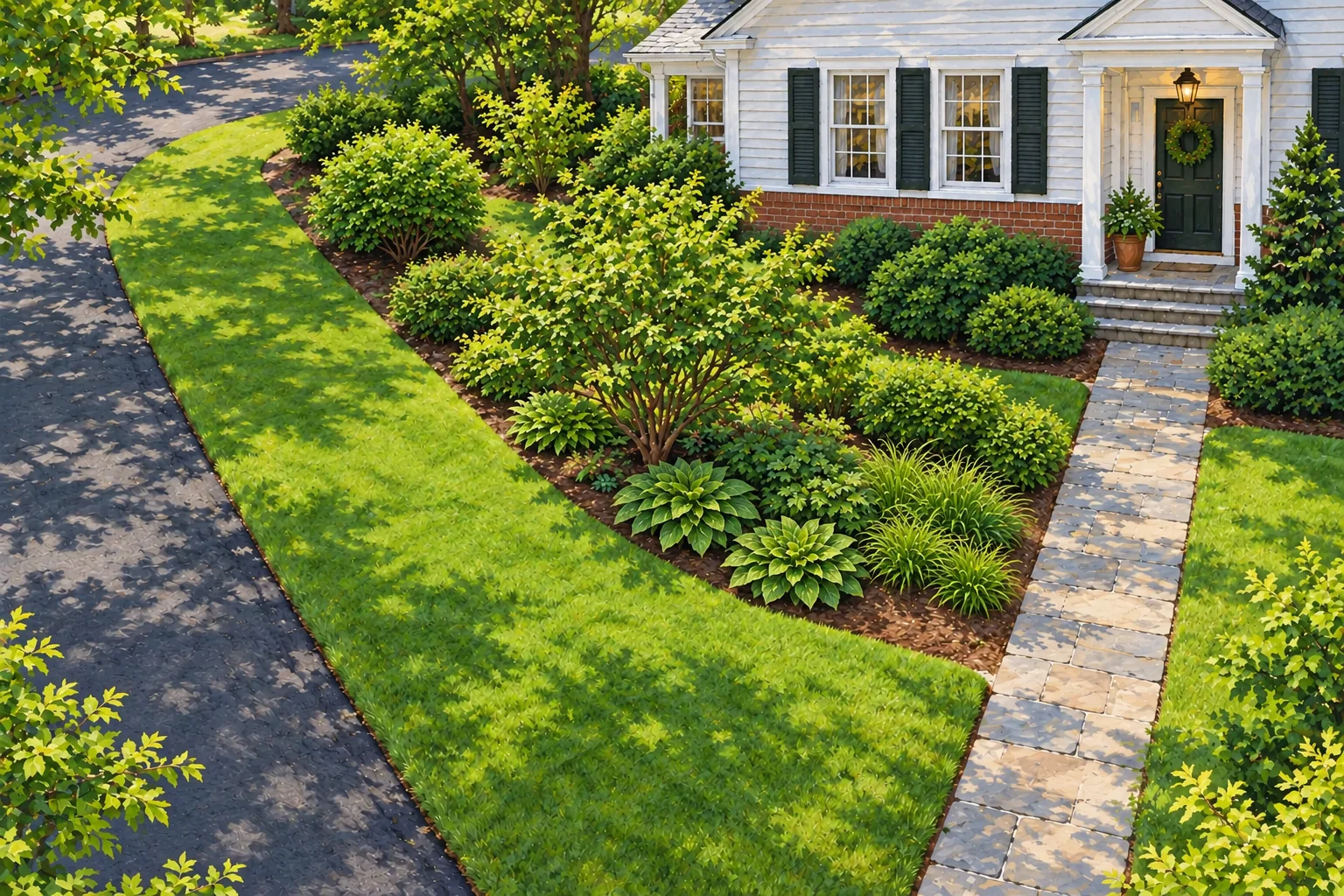
- 1
The female shrub takes the main view
Winterberry (Ilex verticillata) loses its leaves, exposing berries on female plants. Place the shrub where you will see it from a window, with its mature branches clear of the route and outside the regular snow pile.
- 2
A compatible male gets its own space
To set berries, the female needs a male whose flowers open at the same time. Ask the nursery to name the pairing and recommended pollination distance. The male can sit farther back, but it needs its own mature space and a place in the budget.
- 3
The open strip stays available for snow
Keep the usual driveway-side snow storage free of important shrubs and check where meltwater goes. Salt-laden snow and runoff can injure planting even when the plants are cold-hardy.
Sources: Cathy Dewitt, UMass Extension
Change the plant list when your Northeast site changes
The region includes mild coastal gardens, colder inland sites and mountain conditions. Use the example's growing conditions to decide whether it transfers.
Hot, dry ground beside paving
What the example assumes: The summersweet example assumes moisture.
What to change: Choose dry-site plants; don't extend a thirsty woodland palette into the hottest strip.
Cold northern or elevated site
What the example assumes: The named plants and varieties must survive local winter lows.
What to change: Confirm hardiness and local performance before ordering.
Exposed coast or salted roadside
What the example assumes: A sheltered garden is different from salt spray or salty runoff.
What to change: Use locally tested salt-tolerant choices and keep runoff out of sensitive beds.
Sources: NC State Extension, UMass Extension
Take both seasonal views to the nursery
Check the summer and winter views against the same paths, windows and mature plant outlines. A plant sold for ‘four-season interest’ still needs a useful position in your garden.
Before shopping, write down your town, sun exposure, moisture, soil pH if known, and snow-storage area. Ask the nursery about mature size, spreading and local deer pressure. Keep those answers with the plant names so a substitute has to do the same job.
Frequently asked questions
What should I plant in a Northeast front yard?
Start with winter hardiness, light and soil moisture. A moist, partly shaded southern New England bed could use summersweet with Christmas fern; a hot, dry or colder site needs different choices. Include something you'll enjoy after leaves fall, and reserve space for snow before planting beside a driveway.
Why doesn't my winterberry have berries?
A female winterberry needs a compatible male that flowers at the same time. Check the named varieties and local pollination advice. Growing conditions also matter, so confirm soil moisture and plant health rather than assuming another holly nearby is sufficient.
Can I plant shrubs where I pile snow?
Keep important shrubs outside the regular snow-storage area where possible. Heavy piles, deicing salts and meltwater can damage plants. Plan that space before buying and select locally appropriate plants for any unavoidable roadside exposure.
 Gardenful
Give your front garden a view worth keeping.
Explore planting around your own home in Gardenful. See a fuller border, keep the paths clear, and take the suggested plants and quantities to a local nursery.
Gardenful for iPhone
Download the app free and start with a photo of your yard.

Sources(15)
- [1]Summersweet photograph
Andrea Morohttps://commons.wikimedia.org/wiki/File:Clethra_alnifolia_plant_(01).jpg
CC BY-SA 4.0. Converted to WebP.
- [2]Winterberry photograph
Cathy Dewitthttps://plants.ces.ncsu.edu/plants/ilex-verticillata/
CC BY 4.0. Converted to WebP.
- [3]
- [4]
- [5]
- [6]Clethra alnifolia
NC State Extensionhttps://plants.ces.ncsu.edu/plants/clethra-alnifolia/
- [7]Polystichum acrostichoides
NC State Extensionhttps://plants.ces.ncsu.edu/plants/polystichum-acrostichoides/
CC BY 4.0. Resized and converted to WebP.
- [8]Ilex verticillata
NC State Extensionhttps://plants.ces.ncsu.edu/plants/ilex-verticillata/
- [9]Native Shrubs, Subshrubs and Lianas of New Hampshire
University of New Hampshire Extensionhttps://extension.unh.edu/resource/native-shrubs-subshrubs-lianas-new-hampshire
- [10]Ilex glabra
NC State Extensionhttps://plants.ces.ncsu.edu/plants/ilex-glabra/
- [11]Kalmia latifolia
NC State Extensionhttps://plants.ces.ncsu.edu/plants/kalmia-latifolia/
CC BY 4.0. Resized and converted to WebP. Cultivar pictured: Olympic Fire.
- [12]Cornus sericea
NC State Extensionhttps://plants.ces.ncsu.edu/plants/cornus-sericea/
CC BY 4.0. Resized and converted to WebP.
- [13]Incorporating Native Plants in Your Residential Landscape
Rutgers Cooperative Extensionhttps://extension.rutgers.edu/fs1140
- [14]Inkberry photograph
Evelyn Simakhttps://commons.wikimedia.org/wiki/File:Ilex_glabra_(Inkberry)_-_geograph.org.uk_-_567697.jpg
CC BY-SA 2.0. Resized and converted to WebP.
- [15]