Beginner design principles
Landscape design principles for beginners: 6 ideas you can see
The short answer
A coherent landscape usually does six things: shapes the open space intentionally, repeats plants in readable masses, gives one feature visual priority, fits every plant at mature size, uses form and texture before flower color, and looks good from the views people actually use.
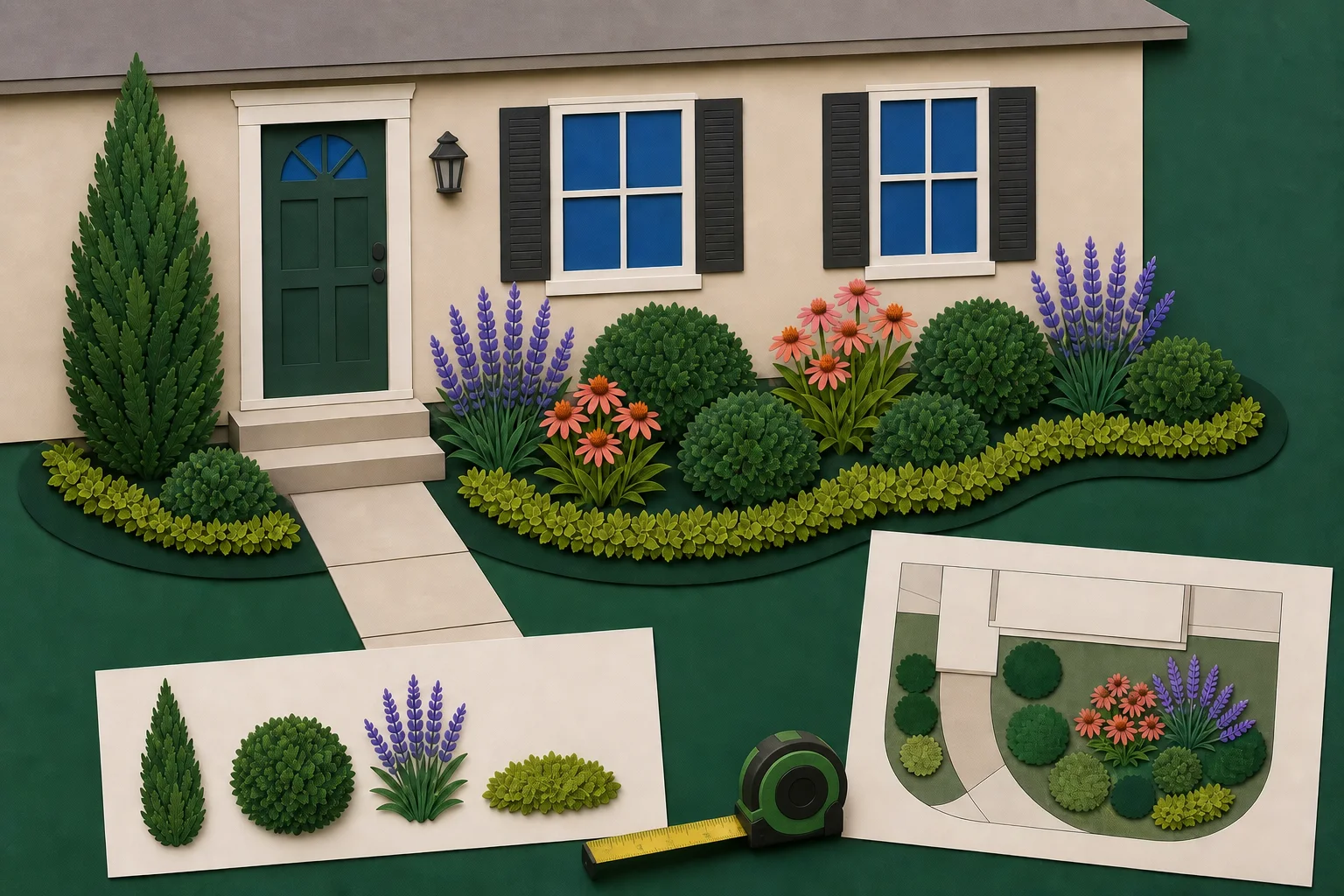
1. Draw the shape that stays empty
Before drawing plants, decide what the lawn, path, patio, or other open area should look like and do.
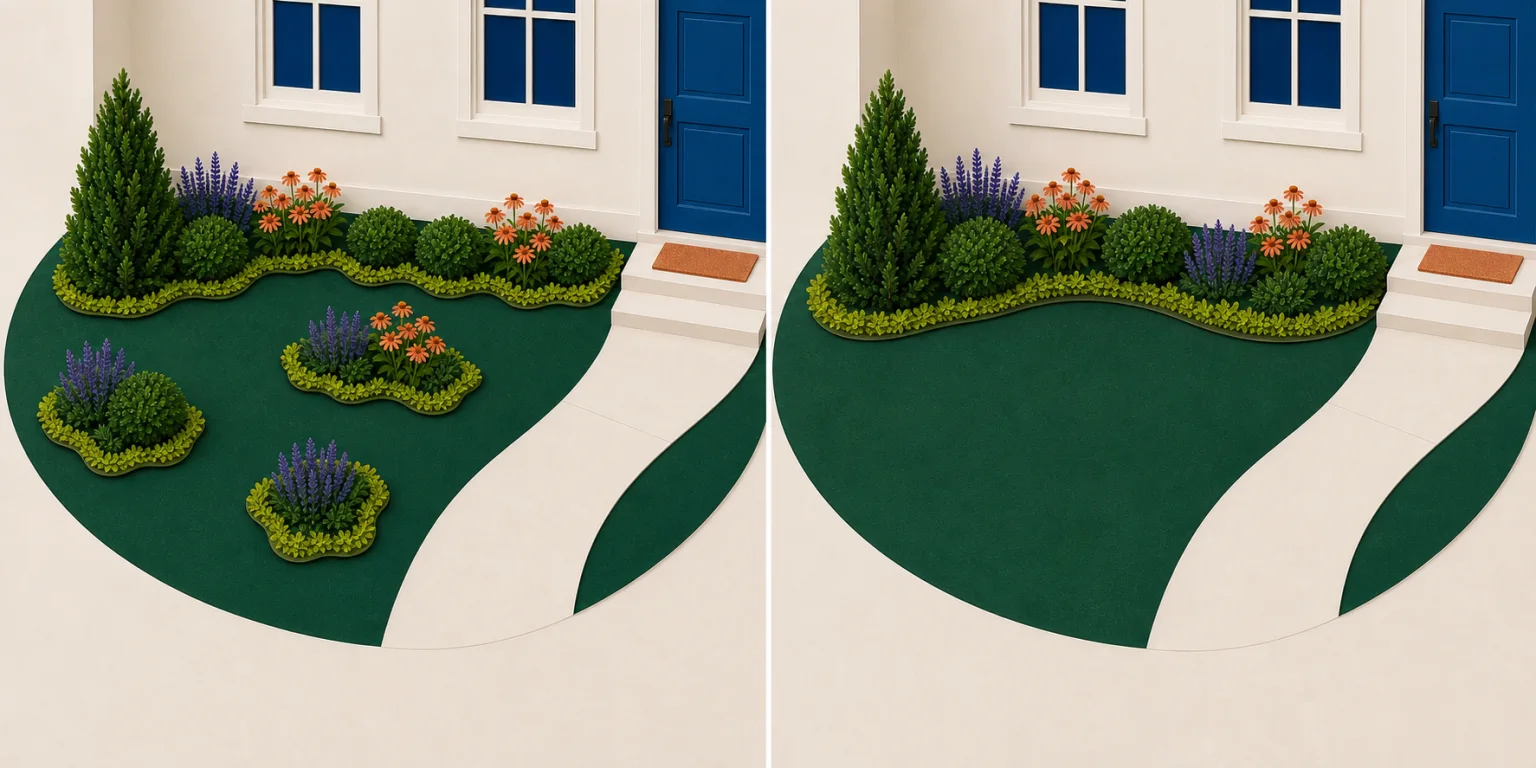
- Fragmented leftovers
- One calm open shape
Bed edges create the outline of the open space. When beds are added as thin strips and isolated islands, the remaining lawn often becomes a collection of awkward slivers. One simple, useful open shape usually gives the whole yard a stronger framework.1,4
Try this on a photo or rough plan: ignore individual plants and darken every planting area as one solid shape. Then look only at what remains. Can you explain what that open area is for, and can you mow, walk, sit, or play there without negotiating leftover corners?
2. Repeat plants in masses, not as scattered singles
Repetition helps the eye connect one part of the yard to another. Massing turns several plants into one readable shape.
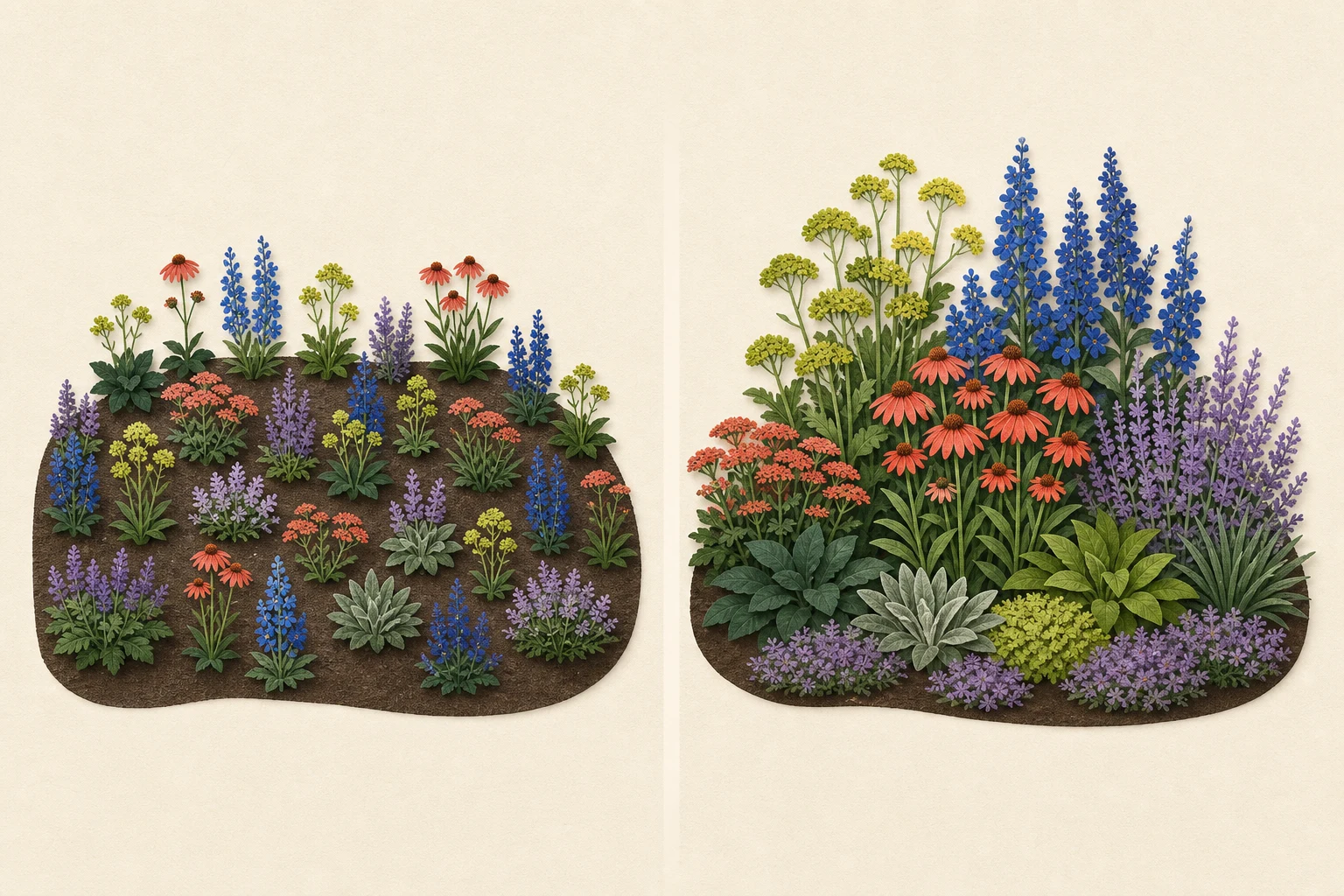
- Scattered singles
- Repeated masses
Repeat a dependable structure plant
Creates continuity
Use one shrub, grass, or evergreen form more than once to hold the composition together after flowers fade.
Make one plant the largest group
Creates a dominant mass
Give the main flowering or foliage plant enough area to read as one shape instead of several unrelated dots.
Echo, do not outline
Creates rhythm without rigidity
Repeat a supporting plant in two or three places. It does not need to trace every edge or appear at perfectly even intervals.
3. Let one thing lead
A focal point works because the surrounding parts are quieter. If every plant demands attention, nothing has priority.
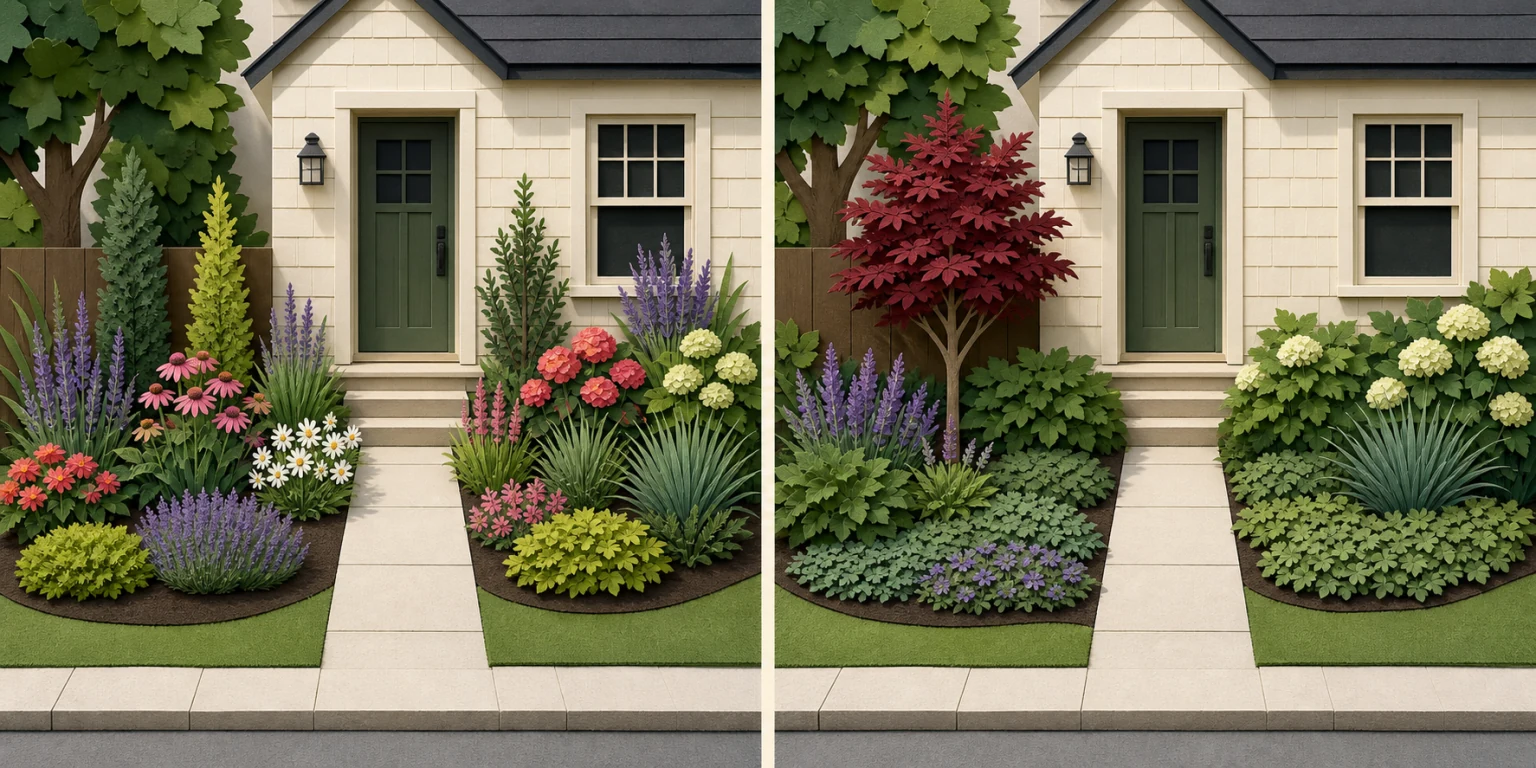
- Several competing accents
- One clear lead
Choose the focal job before choosing the focal plant. The lead might emphasize the entrance, frame a view, mark a turn, or create a destination. Then reserve the tallest form, brightest foliage, strongest texture, or sharpest change in direction for that one job.4,3
Support the lead with a few repeated middle-sized masses and a quiet ground layer, hedge, wall, or open space. The two sides do not need to match. One smaller upright accent can balance a larger, quieter mass as long as neither side feels accidentally heavy.
4. Design the bed at mature size
Nursery plants are temporary sizes. The plan needs to work after the shrubs widen and the perennials knit together.
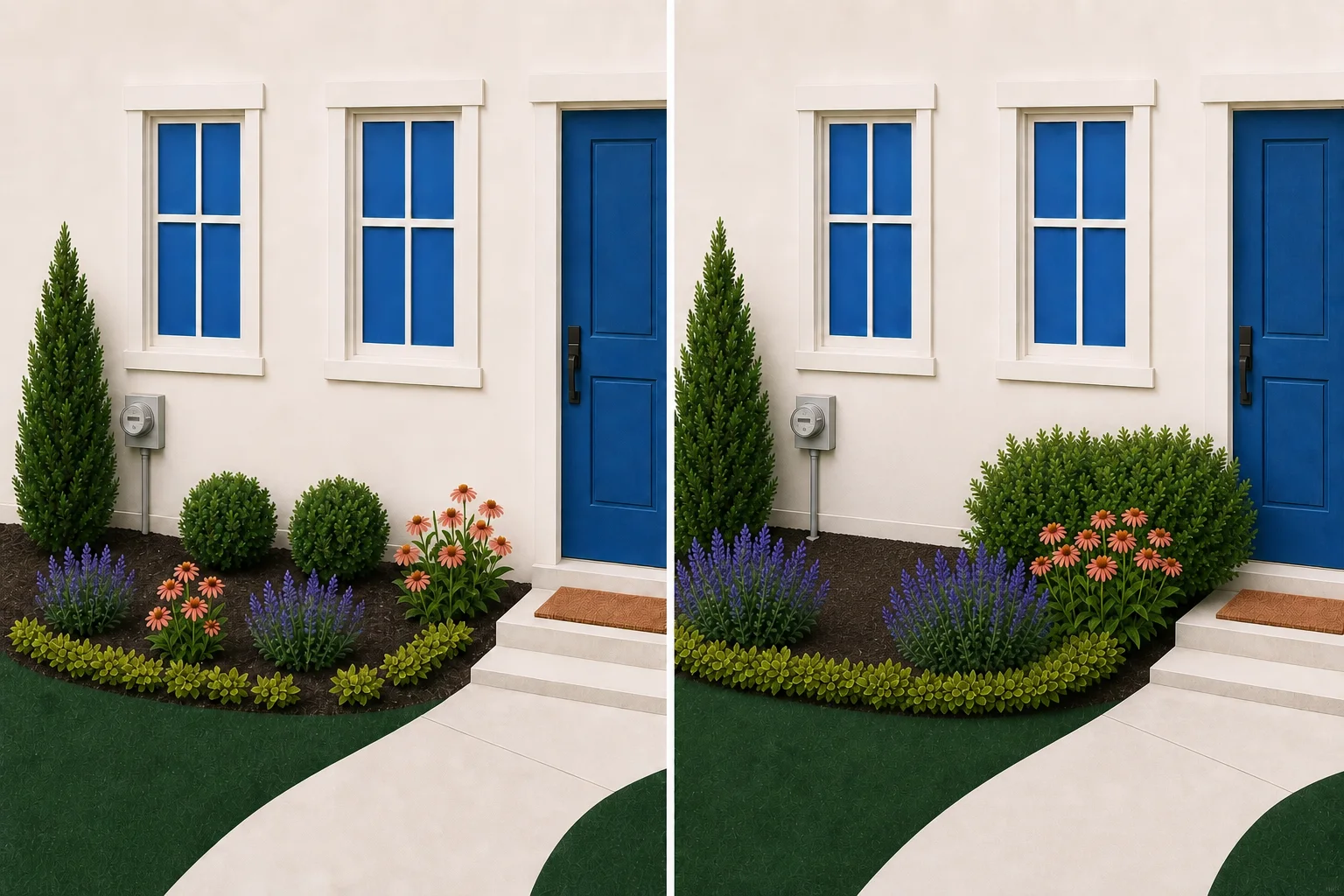
- At planting
- At mature size
Draw or mark the expected mature width of each exact plant variety, not the width of its nursery pot. Keep the resulting outlines below windows and clear of doors, paving, utilities, roof-drip areas, and maintenance routes.3,5
A properly spaced first-year bed can look sparse. Use mulch, a limited number of temporary annuals, or patience for the gaps. Planting permanent shrubs too close simply trades an early full look for crowding, pruning, and expensive removals later.
5. Read form and texture before flower color
Flowers are seasonal. Plant silhouettes, branching, leaf size, and foliage density carry the composition for much more of the year.
Give each plant a visual role, then repeat the smallest useful palette.
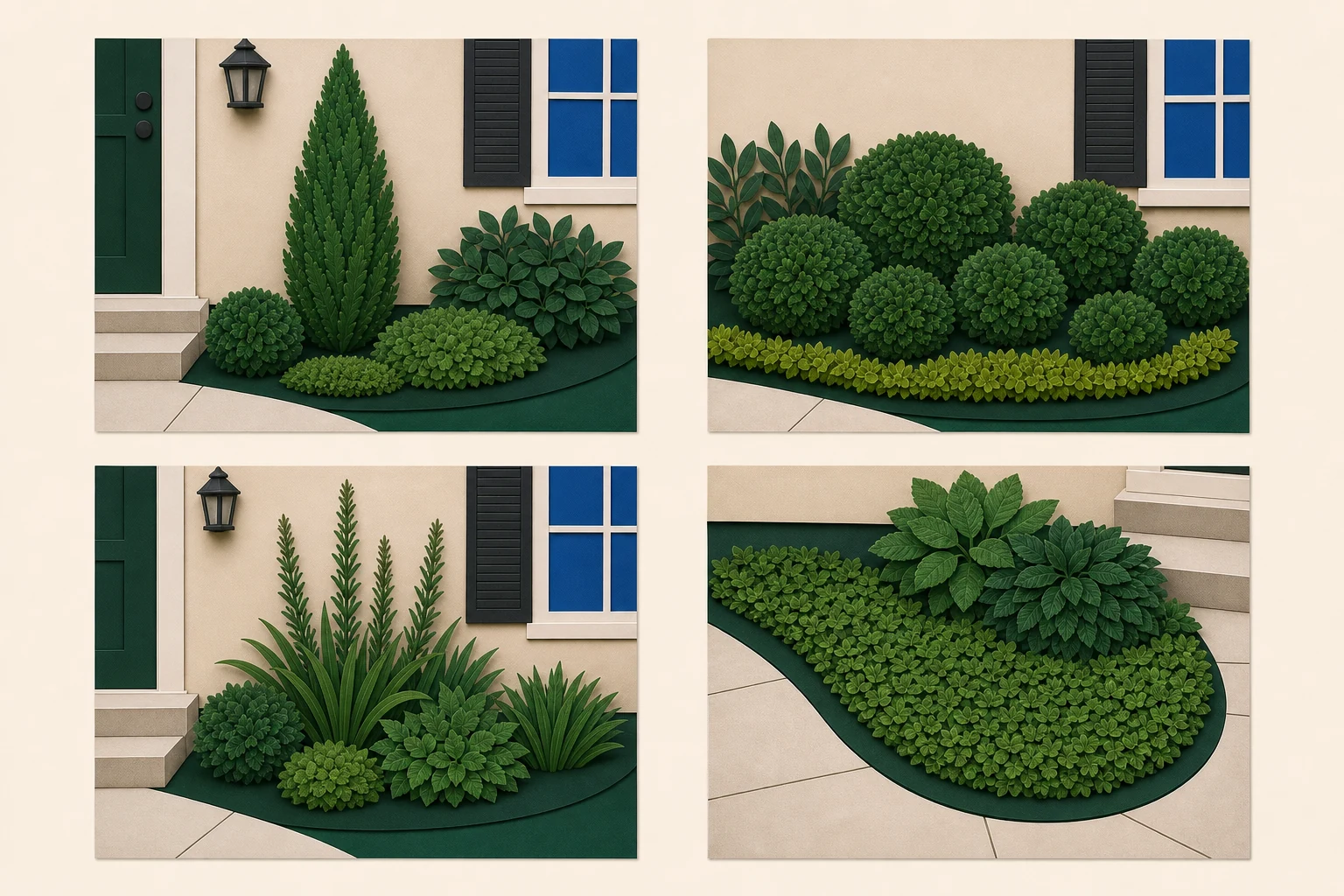
Column or vase
Use sparingly as structure or focus
Adds vertical emphasis near an entry, corner, turn, or view ending.
Mound
Use broadly for continuity
Creates the calm middle layer and is easy to repeat as the main connective mass.
Spire or airy accent
Use as seasonal emphasis
Rises through a mass without becoming a solid wall and adds a measured contrast.
Carpet or low edge
Use where the edge needs a job
Covers soil, softens a boundary, or clarifies a path without outlining every surface.
Once these forms work together in green, add a restrained color palette. Flower color should emphasize an existing hierarchy, not rescue a shapeless layout.
Sources: University of Florida IFAS Extension, University of Florida IFAS Extension
6. Design from the views people actually use
A top-down plan checks fit. Eye-level views reveal whether the focal point, layers, edge, and open space work in daily life.
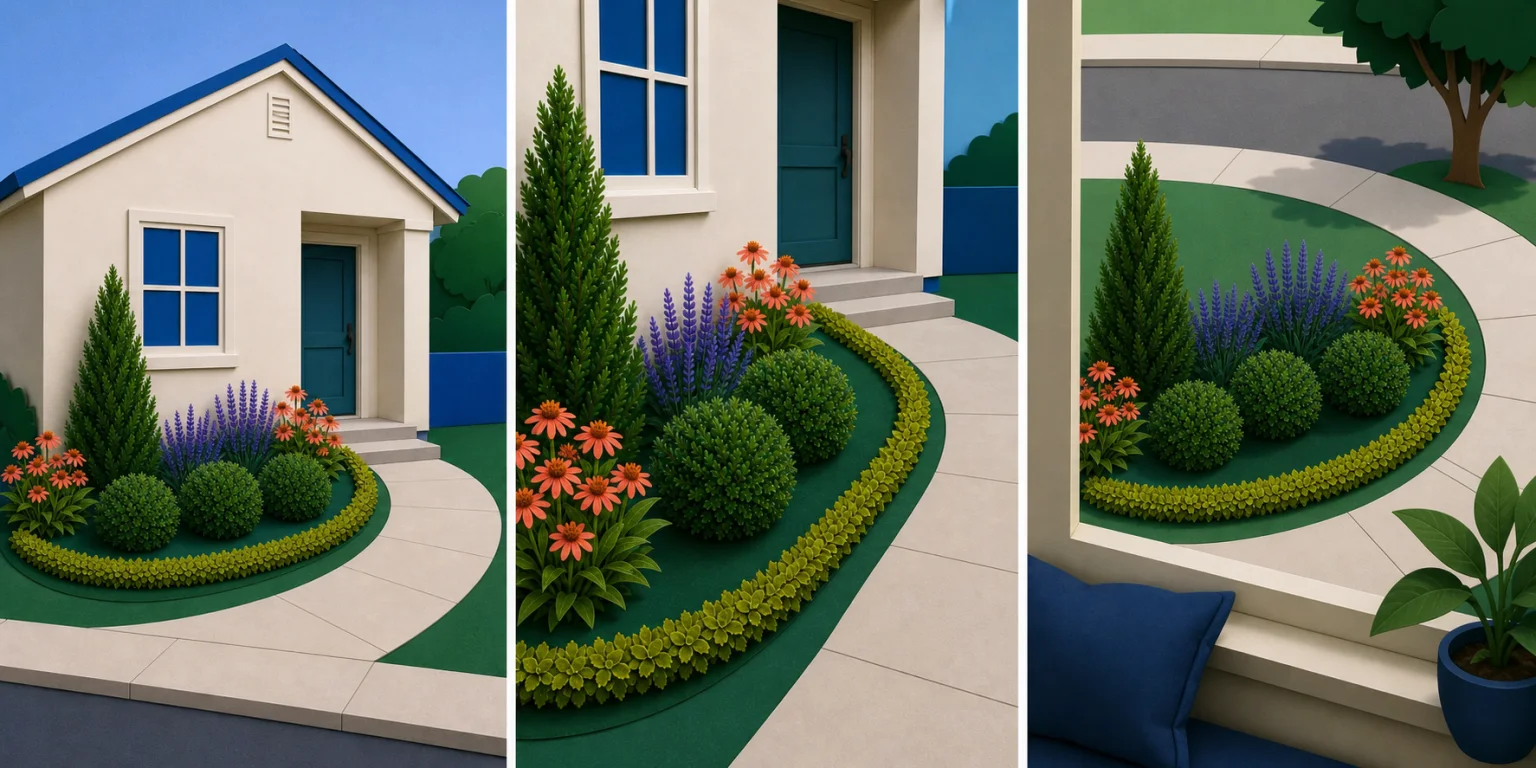
- CurbRead the entry and largest masses first
- PathKeep the route clear and reward a closer look
- WindowFrame one destination and quiet the service view
Photograph the bed from the curb, the path, and the main window or seat. At the curb, ignore individual flowers and check whether the entrance and largest masses register. Beside the path, check mature clearance and decide where foliage texture, scent, or a low edge can reward the closer view.3
From inside, frame one useful open shape or focal feature rather than the backs of every plant and service object. If the design solves only the curb view, revise the masses or focal point before choosing more plants.
Run the six-principle check on your own plan
Use this short review before making a final plant list. A weak answer points to the next design edit.
Open-space shape: Does the unplanted area make one useful, intentional shape?
Repetition and massing: Can you see a few repeated groups, or mostly isolated singles?
Visual priority: Is the main focal point obvious, and are the other elements quieter?
Mature fit: Do exact mature outlines stay clear of windows, paths, utilities, roots, and structures?
Form and texture: Would the layout still work if none of the plants were flowering?
Real viewpoints: Does the composition work from the curb, path, window, patio, or seat that matters?
Principles organize a design; they do not verify plant suitability. Check light, soil, moisture, climate, invasiveness, and local restrictions separately.
Frequently asked questions
What are the basic principles of landscape design?
Common landscape-design principles include line, form, repetition, balance, emphasis, proportion, scale, sequence, variety, and unity. For a beginner, those become six practical checks: shape the open space, repeat plants in masses, choose one focal priority, design at mature size, use form and texture before color, and review the real viewpoints.
Does a balanced landscape need to be symmetrical?
No. Symmetry creates a formal kind of balance, but an asymmetrical design can feel equally stable. One upright focal plant might be balanced by a broader, quieter plant mass on the other side.
Should I choose flower colors before designing the bed?
Usually not. Establish the bed shape, plant forms, height layers, repetition, and mature spacing first. Then use flower color to reinforce the focal point and repeat a restrained palette through an already coherent plan.
How many different plant types should a beginner use?
There is no universal number. Use the fewest types that can provide structure, a main repeated mass, useful contrast, and any needed ground layer. Repeat those plants before adding another variety.
What is the difference between landscape-design steps and principles?
Steps tell you when to make decisions: observe the site, draw routes and open space, arrange plant masses, then choose plants. Principles help you judge whether those decisions work: repetition, hierarchy, scale, form, balance, and unity.
Can Gardenful apply landscape-design principles to my yard photo?
Gardenful can help you explore a composition on your yard photo and organize suggested plants into roles and quantities. Use the six checks in this guide to review the result, then verify exact plants, mature size, site conditions, and local suitability before buying.
 Gardenful
Apply one principle to the yard you already have.
Use Gardenful to explore a clearer bed shape, stronger plant masses, and a focal direction on your photo, then verify the mature plan and local plant fit.
Gardenful for iPhone
Download the app free and start with a photo of your yard.

How this guide was built
The six lessons translate established landscape-design guidance into checks a beginner can apply to a real residential yard.
We compared extension guidance on line, form, mass, repetition, balance, emphasis, scale, proportion, plant arrangement, mature spacing, and measured planting plans.
We combined overlapping terms only when they led to the same practical decision. The visuals keep the house and plant palette stable so the design principle, not a bigger budget, creates the difference.
The illustrations teach composition; choose exact species only after checking the site's climate, soil, light, and mature space.
Sources(5)
- [1]
- [2]
- [3]Landscape Design: Arranging Plants in the Landscape
University of Florida IFAS Extensionhttps://ask.ifas.ufl.edu/publication/EP449
- [4]Basic Principles of Landscape Design
University of Florida IFAS Extensionhttps://ask.ifas.ufl.edu/publication/MG086
- [5]Landscape Design: Drawing a Planting Plan
University of Florida IFAS Extensionhttps://ask.ifas.ufl.edu/publication/EP456